Invitation & Access · Palm Springs
Bermuda Dunes Country ClubBermuda Dunes
Billy Bell's 27-hole Coachella Valley club, where Arnold Palmer won his last PGA Tour event.
Par
72
Yardage
7,012
Rating · Slope
73.7 · 132
Holes
18
Green Fee
Members only
The Course
About Bermuda Dunes Country Club
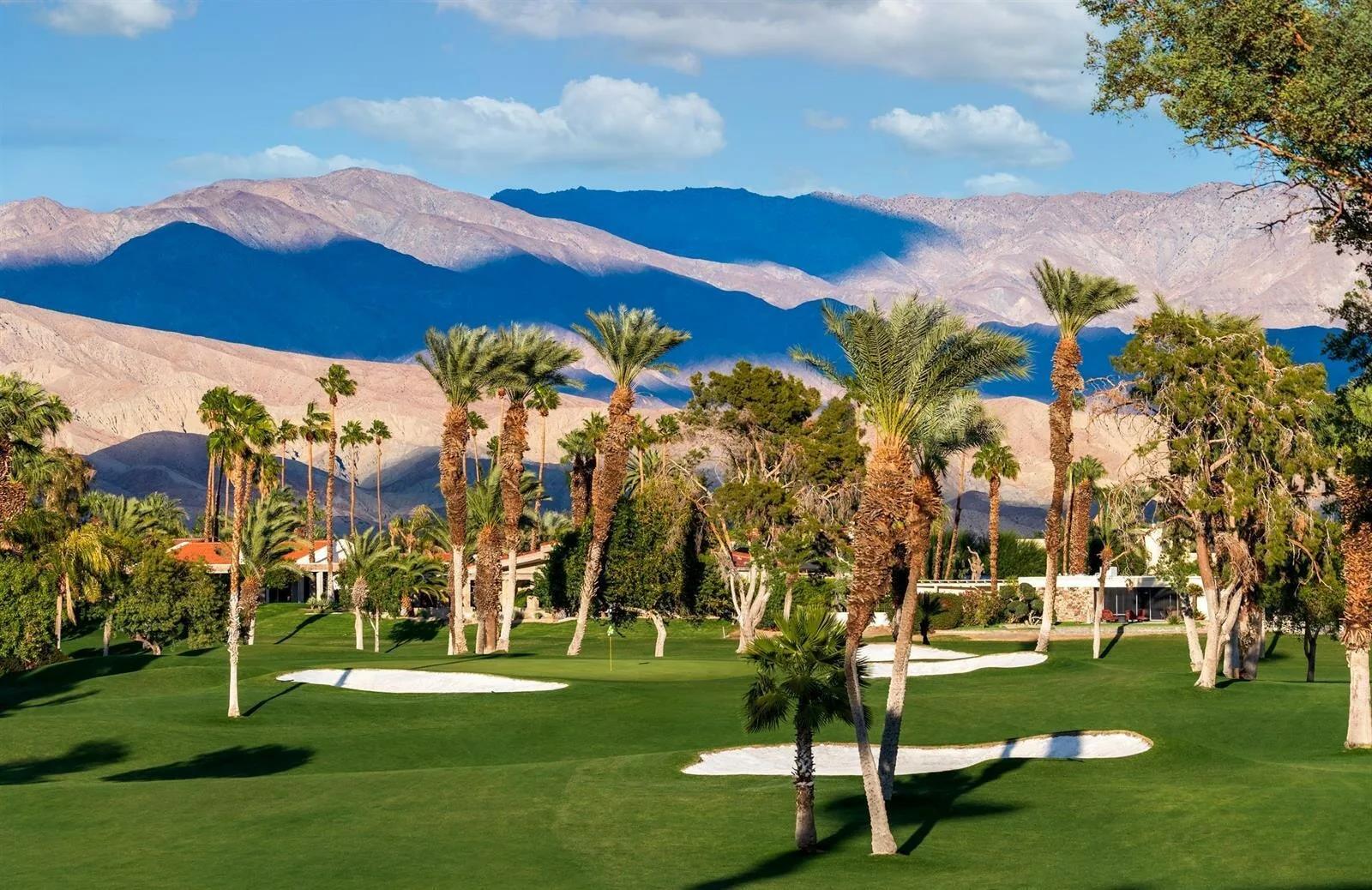
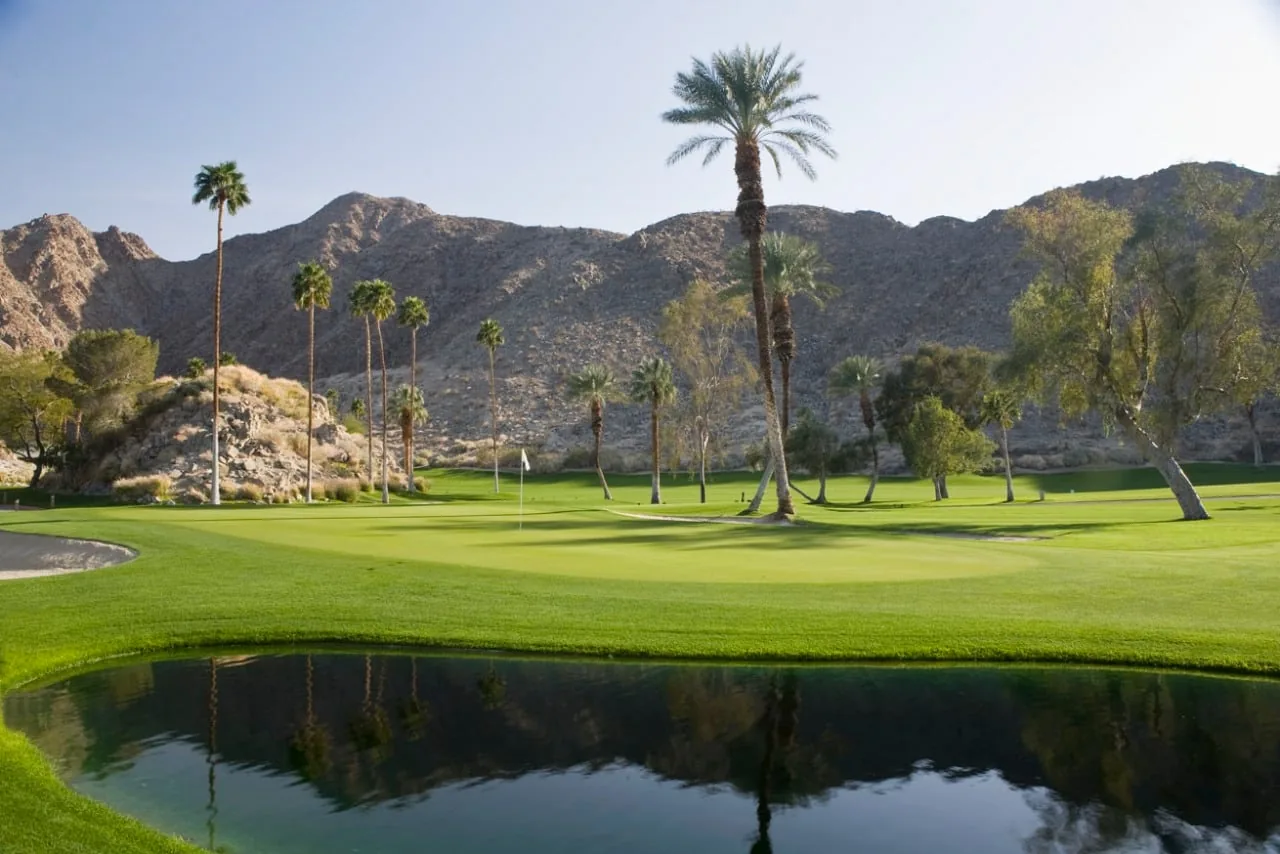
In the Coachella Valley, Bermuda Dunes is a private club for members and their guests, with 27 holes of Billy Bell golf arranged as three nines. Palms, freshwater lakes and views of the San Jacinto Mountains frame wide fairways, and homes sit well back from the holes. Paired as the Classic nines, the course plays 7,012 yards, par 72, at 73.7/132 from the Black tees.
History
Bermuda Dunes Country Club — History
Developers Ernie Dunlevie and Ray Ryan started construction on February 14, 1958, and the club's 2013 website dated the opening to 1959. Bermuda Dunes was a Bob Hope Classic venue for five decades: Arnold Palmer won his first Classic there in 1960 and, in 1973, his last PGA Tour event. A South Korea-based company, SJS Tomorrow, bought the club in 2019 through Steele Canyon Golf Corporation.
Design
Bermuda Dunes Country Club — Design
The developers' instruction to Billy Bell Jr., as the club records it, was to make the course long enough to test professionals but with fairways wide enough that average golfers would not always be out of bounds or in a hazard. The club calls the result a traditional classic course, with freshwater lakes, including one on the par-5 18th, and back tees that have grown since 2013, when the Classic pairing measured 7,017 yards.
What Sets It Apart
Why Play Bermuda Dunes Country Club
Bermuda Dunes spent roughly half a century in the Bob Hope Classic rotation, hosting the final round 16 times according to The Desert Sun, and is where Arnold Palmer won his last PGA Tour event.
The Round
The Journey at Bermuda Dunes Country Club
I.
The Opening
A par 5 starts the round at Bermuda Dunes: 541 yards from the Black tees on the Classic pairing, yet rated only No. 15. The test arrives straight after, as the 427-yard 2nd is the hardest hole on the card and the 395-yard 3rd ranks third. The 228-yard 4th is the longest par 3, the 435-yard 5th follows, and the 371-yard 6th is the shortest par 4.
II.
The Middle
On this pairing the two nines differ by just six yards. The front closes with the 176-yard 7th, the 540-yard 8th, a par 5 ranked No. 17, and the 390-yard 9th, rated fifth. The 409-yard 10th, the No. 4 handicap, and the 402-yard 11th open the back, and the 160-yard 12th is both the shortest hole and the lowest-ranked.
III.
The Finish
The 564-yard 13th is the longest hole, followed by the 390-yard 14th and 404-yard 15th. The 16th, at 451 yards the longest par 4, is the No. 2 handicap. The par-3 17th measures 215 yards, and a 2019 description noted two trees narrowing its tee. The closing par 5, at 514 yards the shortest of the four, brings one of the club's freshwater lakes into play.
How to Play It
Bermuda Dunes Country Club — Playing Strategy
Beginner / High Handicap
Wide fairways were part of Bell's brief, so first-time guests can swing freely off the tee and save caution for approaches near the lakes. A forward set helps, since the Black tees rate 73.7/132. Play the 18th, a par 5 with a lake, as a three-shot hole if in any doubt.
Intermediate / Mid Handicap
With 7,012 yards on the Classic pairing and fairways that Bell was told to keep wide, driver is usually the right club off the tee. Use the length to set up shorter approaches, and check which pairing of the 27 holes the day's round uses, since the club rates each combination separately.
Advanced / Low Handicap
Bell was asked for a course long enough to test professionals, and the Classic pairing now measures 7,012 yards at 73.7/132 from the Black tees. Plan for the finish: the par-3 17th, described in 2019 as about 210 yards from the back with two trees narrowing the tee, and then the par-5 18th and its lake.
Signature Holes
Bermuda Dunes Country Club — Signature Holes
The Card
Bermuda Dunes Country Club Scorecard
| Hole | 1 | 2 | 3 | 4 | 5 | 6 | 7 | 8 | 9 | Out | 10 | 11 | 12 | 13 | 14 | 15 | 16 | 17 | 18 | In | Total |
|---|---|---|---|---|---|---|---|---|---|---|---|---|---|---|---|---|---|---|---|---|---|
| Par | 5 | 4 | 4 | 3 | 4 | 4 | 3 | 5 | 4 | 36 | 4 | 4 | 3 | 5 | 4 | 4 | 4 | 3 | 5 | 36 | 72 |
| Yards | 541 | 427 | 395 | 228 | 435 | 371 | 176 | 540 | 390 | 3,503 | 409 | 402 | 160 | 564 | 390 | 404 | 451 | 215 | 514 | 3,509 | 7,012 |
| Handicap | 15 | 1 | 3 | 7 | 11 | 9 | 13 | 17 | 5 | — | 4 | 6 | 18 | 14 | 10 | 8 | 2 | 12 | 16 | — | — |
Good to Know
Bermuda Dunes Country Club — questions answered
- How do I get on Bermuda Dunes Country Club?
- Bermuda Dunes Country Club is a private club — play is reserved for members and their guests. The only way on is a membership or a member's invitation; there is no public tee sheet.
- Who designed Bermuda Dunes Country Club?
- Bermuda Dunes Country Club was designed by William F. Bell and opened in 1959.
- What is the par and yardage at Bermuda Dunes Country Club?
- Bermuda Dunes Country Club plays to a par of 72 over 7,012 yards from the championship tees, with a course rating of 73.7 and a slope of 132.
- Is Bermuda Dunes Country Club public or private?
- Bermuda Dunes Country Club is a private member club — not open to public play. Access is by membership or a member's invitation; there is no public tee sheet.
- Where is Bermuda Dunes Country Club located?
- Bermuda Dunes Country Club is located at 42765 Adams St, Bermuda Dunes, CA 92203, in the Palm Springs area of California.
More in Palm Springs
More golf courses in Palm Springs
Clive Clark · Indian Wells
Indian Wells Golf Resort — Celebrity Course
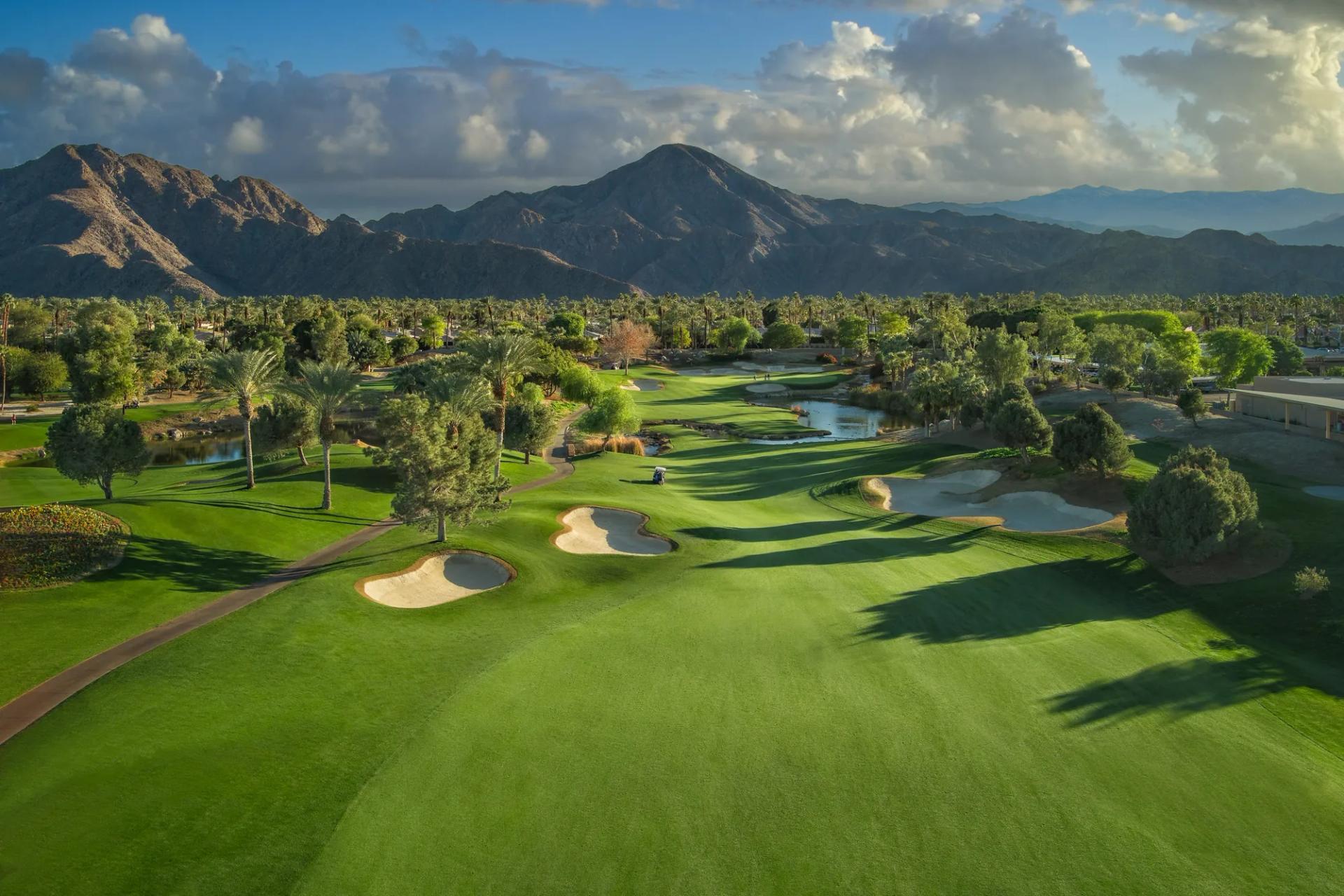
Fourteen par 4s, split-level lakes and waterfalls: Clive Clark's 2006 course at Indian Wells Golf Resort.
John Fought · Indian Wells
Indian Wells Golf Resort — Players Course
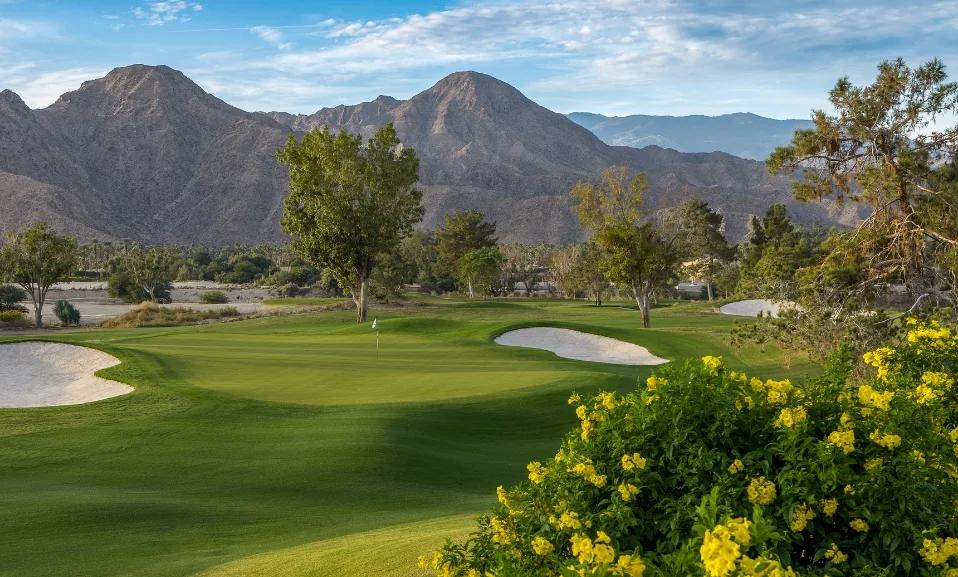
A Riviera-influenced John Fought design in Indian Wells, rerouted to a par 71 in 2025.
Indian Wells
Indian Wells Country Club — Classic Course
The 1956 Classic Course at Indian Wells Country Club, a longtime Bob Hope Desert Classic host.
How to Play It
How to Play Bermuda Dunes Country Club.
Bermuda Dunes Country Club is a private club — play is reserved for members and their guests, with no public tee sheet. The only way on is a membership or a member's invitation.
Golf in CA is an independent guide — we don’t sell tee times or mark them up. We map the exact way on.