Invitation & Access · Bay Area
Claremont Country ClubOakland
A private Oakland club whose par-68 course MacKenzie redesigned in the late 1920s.
Par
68
Yardage
5,452
Rating · Slope
67.7 · 125
Holes
18
Green Fee
Members only
The Course
About Claremont Country Club
Claremont Country Club, a private club for members and their guests, occupies a site in Oakland's Rockridge neighborhood beside the Oakland Hills and Piedmont. Its course is short by modern standards: par 68 and 5,452 yards from the Blue tees, rated 67.7/125, with six par 3s and two par 5s. Sam Snead remembered it as "a little jewel of a course," and the club holds certified status with the Alister MacKenzie Society.
History
Claremont Country Club — History
The course opened in December 1904 as nine holes laid out by club pro George Smith and his brother Alex, and reached 18 in 1909. Willie Watson and Robert Hunter later added length, and Alister MacKenzie's redesign, planned in 1926, was built from 1927 to 1929. Sam Snead won his first professional tournament, the 1937 Oakland Open, here. Renaissance Golf Design restored the MacKenzie features in the 2000s.
Design
Claremont Country Club — Design
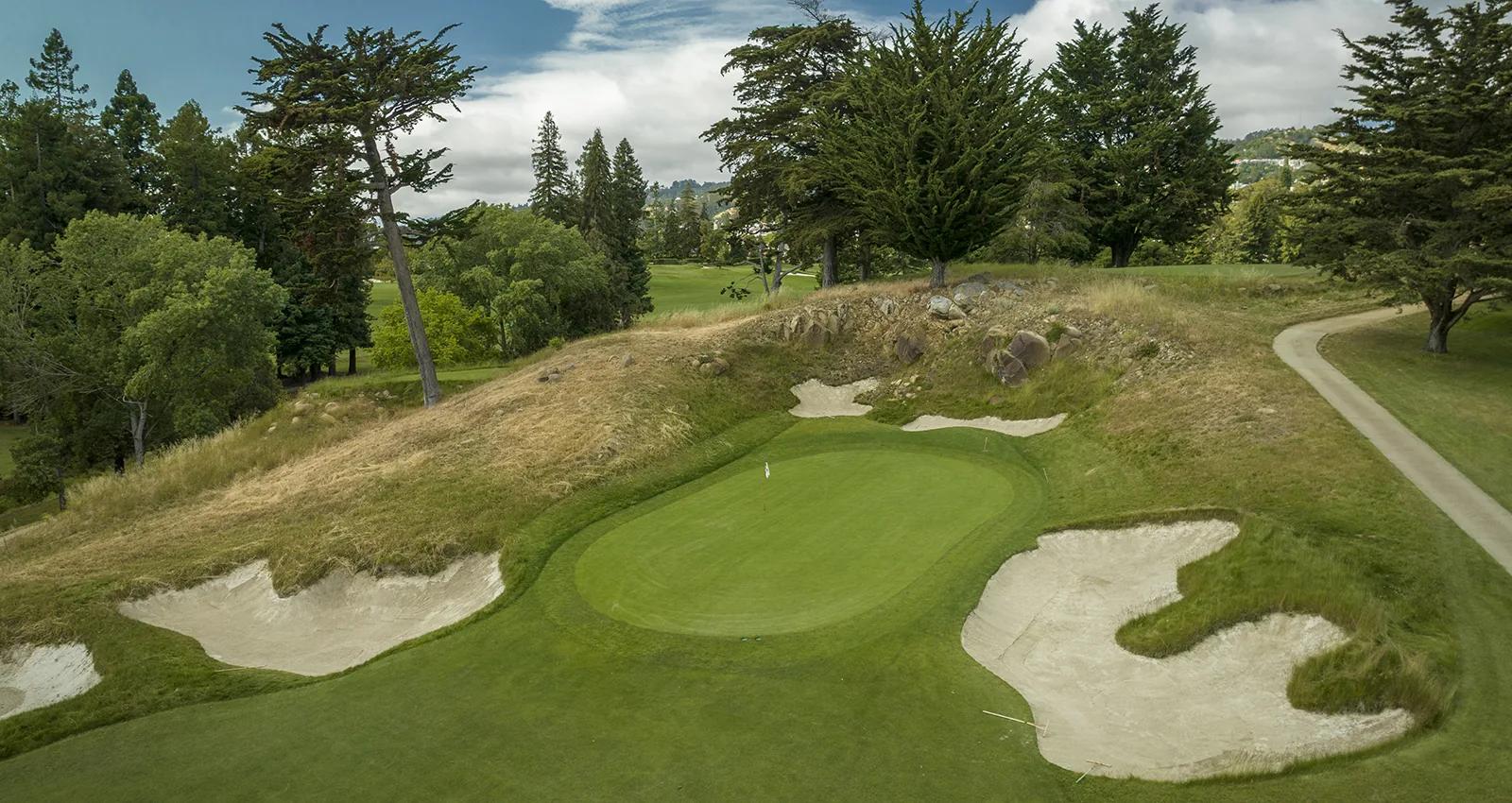
MacKenzie rerouted six holes, the 2nd, 3rd, 5th, 6th, 12th and 17th, and reworked bunkers, fairways and greens on seven more, according to the MacKenzie Society. The restoration, with Jim Urbina on site, used a 1930 aerial photograph to return bunkers, tees and greens to their positions: 12 fairway bunkers came out, 60 greenside bunkers were redesigned, and four greens were rebuilt with gentler slopes for modern speeds. Tree removal reopened sight lines.
What Sets It Apart
Why Play Claremont Country Club
Claremont is a certified MacKenzie design at par 68, with six par 3s, and the course where Sam Snead won his first professional tournament, the 1937 Oakland Open.
The Round
The Journey at Claremont Country Club
I.
The Opening
The shorter of Claremont's two par 5s comes first: the 443-yard 1st, rated the easiest hole. Two par 3s follow in a row, the 212-yard 2nd, the No. 4 handicap, and the 139-yard 3rd, both rerouted by MacKenzie. The 339-yard 4th, with a green rebuilt in the restoration, and the 329-yard 5th follow, and the 252-yard 6th is the shortest par 4.
II.
The Middle
The 380-yard 7th, the No. 2 handicap, plays to another green rebuilt in the restoration. The 164-yard 8th and 387-yard 9th close a par-34 front nine of 2,645 yards. The 10th, also 164 yards, lies beside the quarry the club bought in 1932 for its water. The 389-yard 11th has a rebuilt green, and Watson and Hunter built the 395-yard 12th, the No. 1 handicap, by clearing trees before MacKenzie rerouted it.
III.
The Finish
The 224-yard 13th is the longest par 3 and the No. 3 handicap; Watson and Hunter turned it around with a new tee. The 287-yard 14th and 336-yard 15th are short par 4s before the 374-yard 16th. The 135-yard 17th, another MacKenzie reroute, is the shortest hole, and the 503-yard 18th finishes at a green framed by a rear bunker Jim Urbina restored in 2017.
How to Play It
Claremont Country Club — Playing Strategy
Beginner / High Handicap
At 5,452 yards and 67.7/125 from the Blue tees, Claremont is short enough for a first-time guest to play the full course. The par 3s carry the challenge: there are six, and the 2nd and 13th, both over 200 yards, rank among the four hardest holes. Take the 443-yard 1st, rated easiest, as a steady three-shot start.
Intermediate / Mid Handicap
Par 68 means only two par 5s, so most birdie chances come on the short par 4s: the 252-yard 6th, 287-yard 14th and 329-yard 5th. The hardest stretch by handicap runs from the 7th to the 13th, where the 12th, 7th and 13th rank 1 to 3. The greens rebuilt on the 4th, 7th, 11th and 12th were given less slope than the originals, by design.
Advanced / Low Handicap
Claremont's 5,452 yards will not test length, so scoring comes down to the par 3s and wedge play. The 212-yard 2nd and 224-yard 13th are the holes where par is a good score, while the 135-yard 17th and 139-yard 3rd are the birdie holes. Sixty greenside bunkers were redesigned to MacKenzie's 1930 positions, so club selection beats aggression into the greens.
Signature Holes
Claremont Country Club — Signature Holes
The Card
Claremont Country Club Scorecard
| Hole | 1 | 2 | 3 | 4 | 5 | 6 | 7 | 8 | 9 | Out | 10 | 11 | 12 | 13 | 14 | 15 | 16 | 17 | 18 | In | Total |
|---|---|---|---|---|---|---|---|---|---|---|---|---|---|---|---|---|---|---|---|---|---|
| Par | 5 | 3 | 3 | 4 | 4 | 4 | 4 | 3 | 4 | 34 | 3 | 4 | 4 | 3 | 4 | 4 | 4 | 3 | 5 | 34 | 68 |
| Yards | 443 | 212 | 139 | 339 | 329 | 252 | 380 | 164 | 387 | 2,645 | 164 | 389 | 395 | 224 | 287 | 336 | 374 | 135 | 503 | 2,807 | 5,452 |
| Handicap | 18 | 4 | 12 | 8 | 16 | 14 | 2 | 10 | 6 | — | 9 | 5 | 1 | 3 | 17 | 11 | 7 | 13 | 15 | — | — |
Good to Know
Claremont Country Club — questions answered
- How do I get on Claremont Country Club?
- Claremont Country Club is a private club — play is reserved for members and their guests. The only way on is a membership or a member's invitation; there is no public tee sheet.
- Who designed Claremont Country Club?
- Claremont Country Club was designed by Alister MacKenzie and opened in 1904.
- What is the par and yardage at Claremont Country Club?
- Claremont Country Club plays to a par of 68 over 5,452 yards from the championship tees, with a course rating of 67.7 and a slope of 125.
- Is Claremont Country Club public or private?
- Claremont Country Club is a private member club — not open to public play. Access is by membership or a member's invitation; there is no public tee sheet.
- Where is Claremont Country Club located?
- Claremont Country Club is located at 5295 Broadway Ter, Oakland, CA 94618, in the Bay Area area of California.
More in Bay Area
More golf courses in Bay Area
William Watson · Orinda
Orinda Country Club
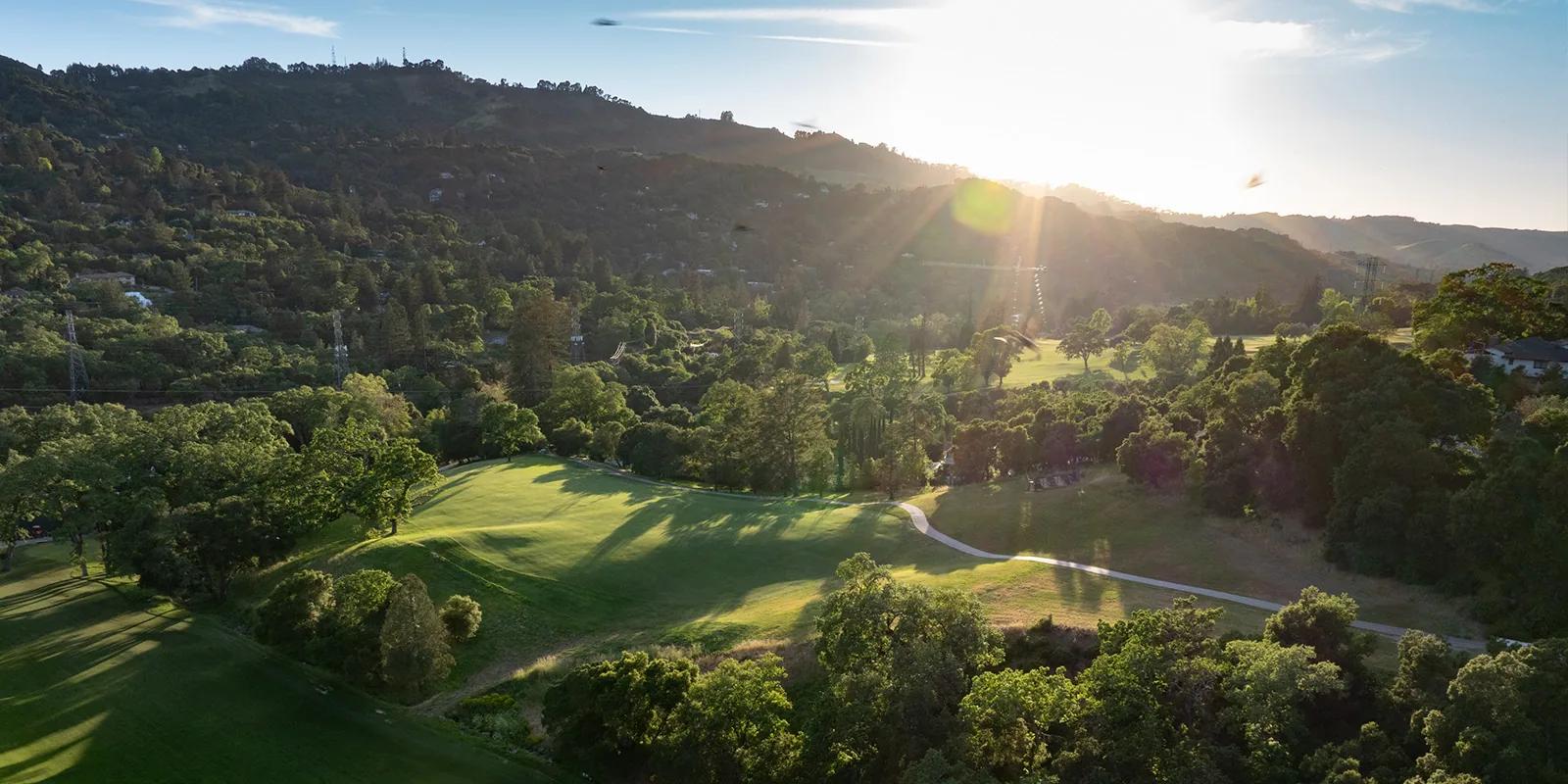
A private Orinda club playing William Watson's 1924 course, renovated by Todd Eckenrode in 2015.
Rees Jones · Alameda
Corica Park — South Course
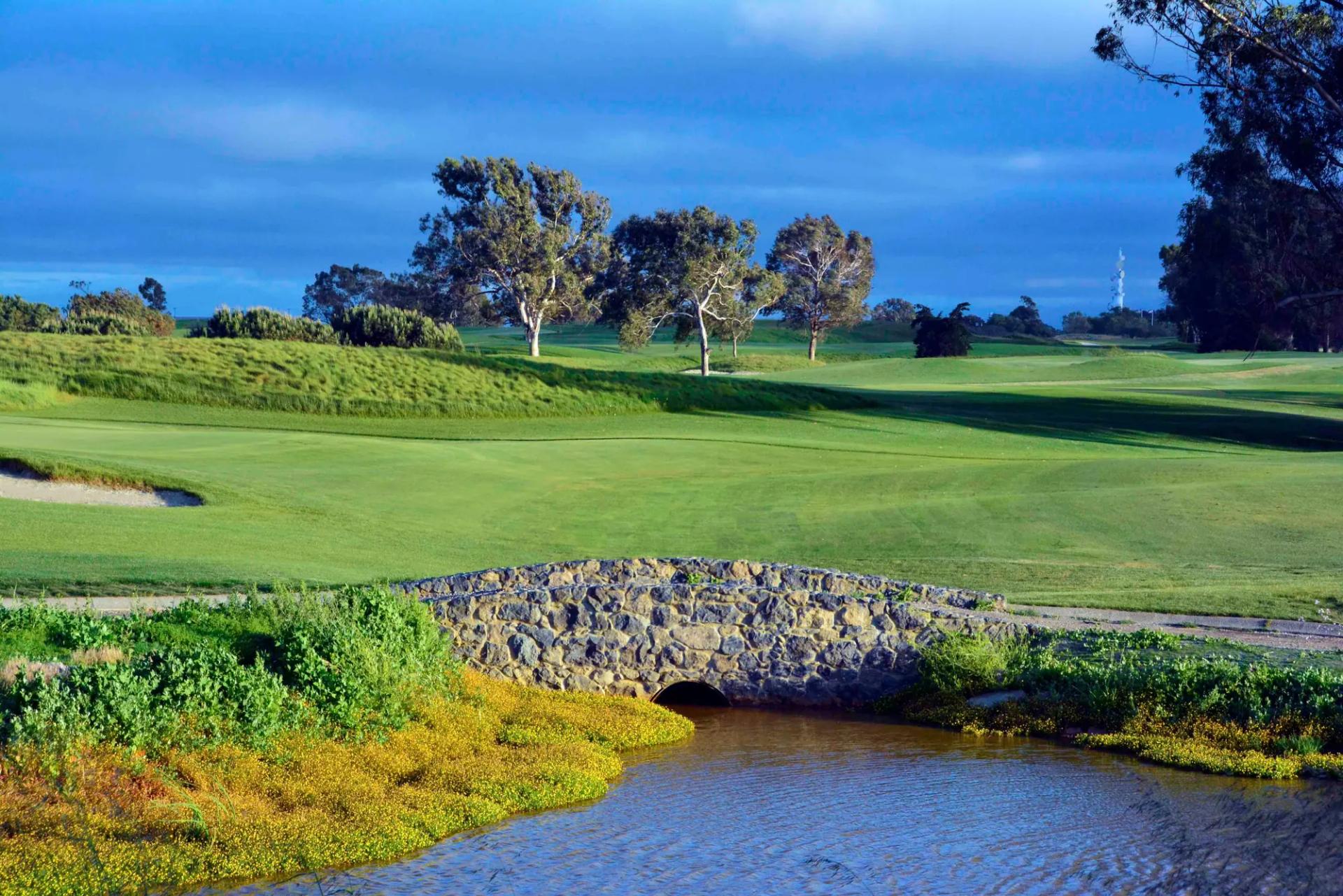
Rees Jones's Australian Sandbelt-style rebuild of Alameda's municipal South Course on Bay Farm Island.
Robert Wood Johnstone · San Francisco
Presidio Golf Course
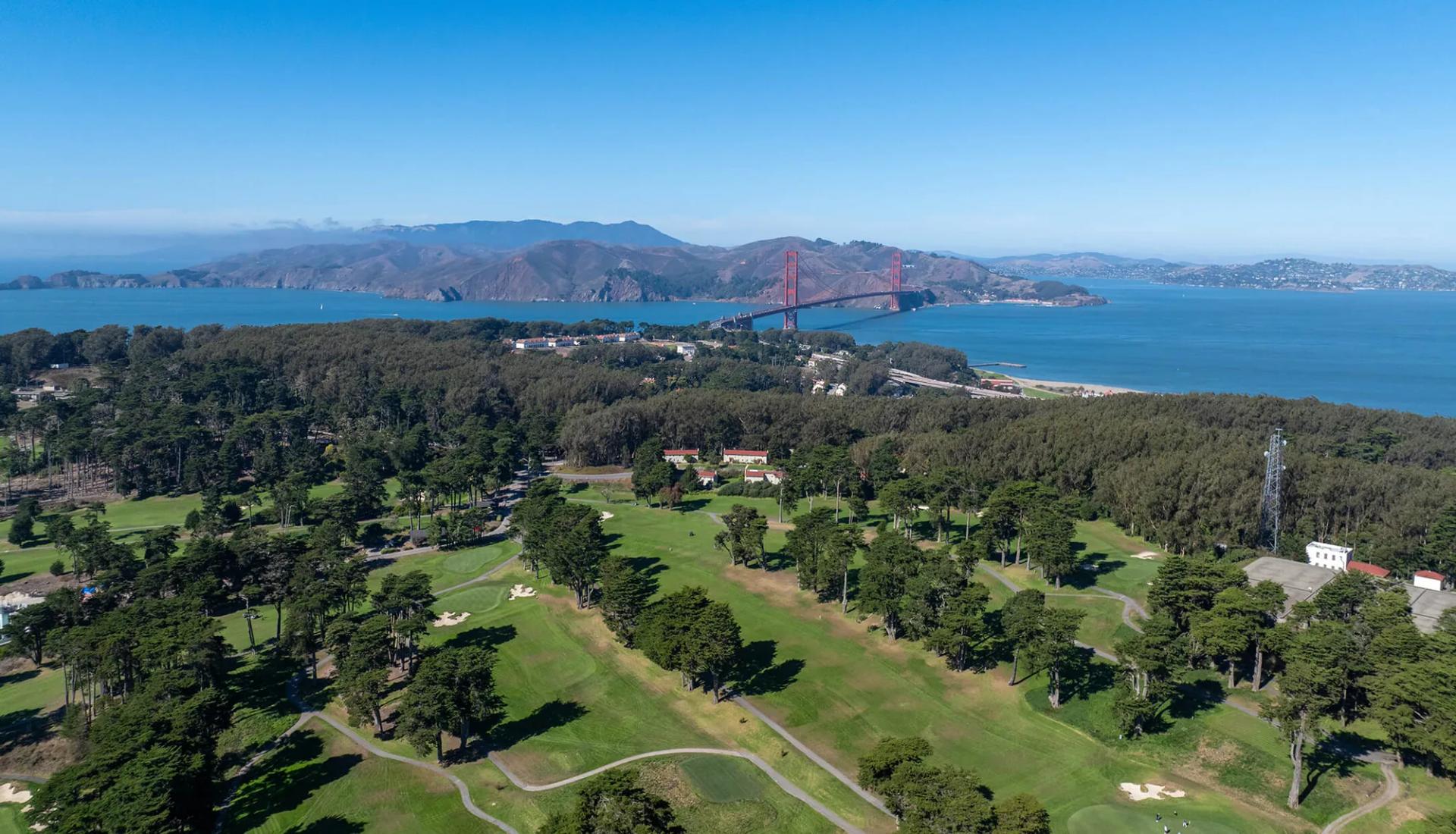
An 1895 course inside San Francisco's Presidio national park site, open to the public since 1995.
How to Play It
How to Play Claremont Country Club.
Claremont Country Club is a private club — play is reserved for members and their guests, with no public tee sheet. The only way on is a membership or a member's invitation.
Golf in CA is an independent guide — we don’t sell tee times or mark them up. We map the exact way on.