Public Play · Bay Area
Half Moon Bay Golf Links — Ocean CourseHalf Moon Bay
Arthur Hills's links-style public course on the Half Moon Bay bluffs beside the Ritz-Carlton.
Par
72
Yardage
6,914
Rating · Slope
72.5 · 132
Holes
18
Green Fee
Contact for pricing
The Course
About Half Moon Bay Golf Links — Ocean Course
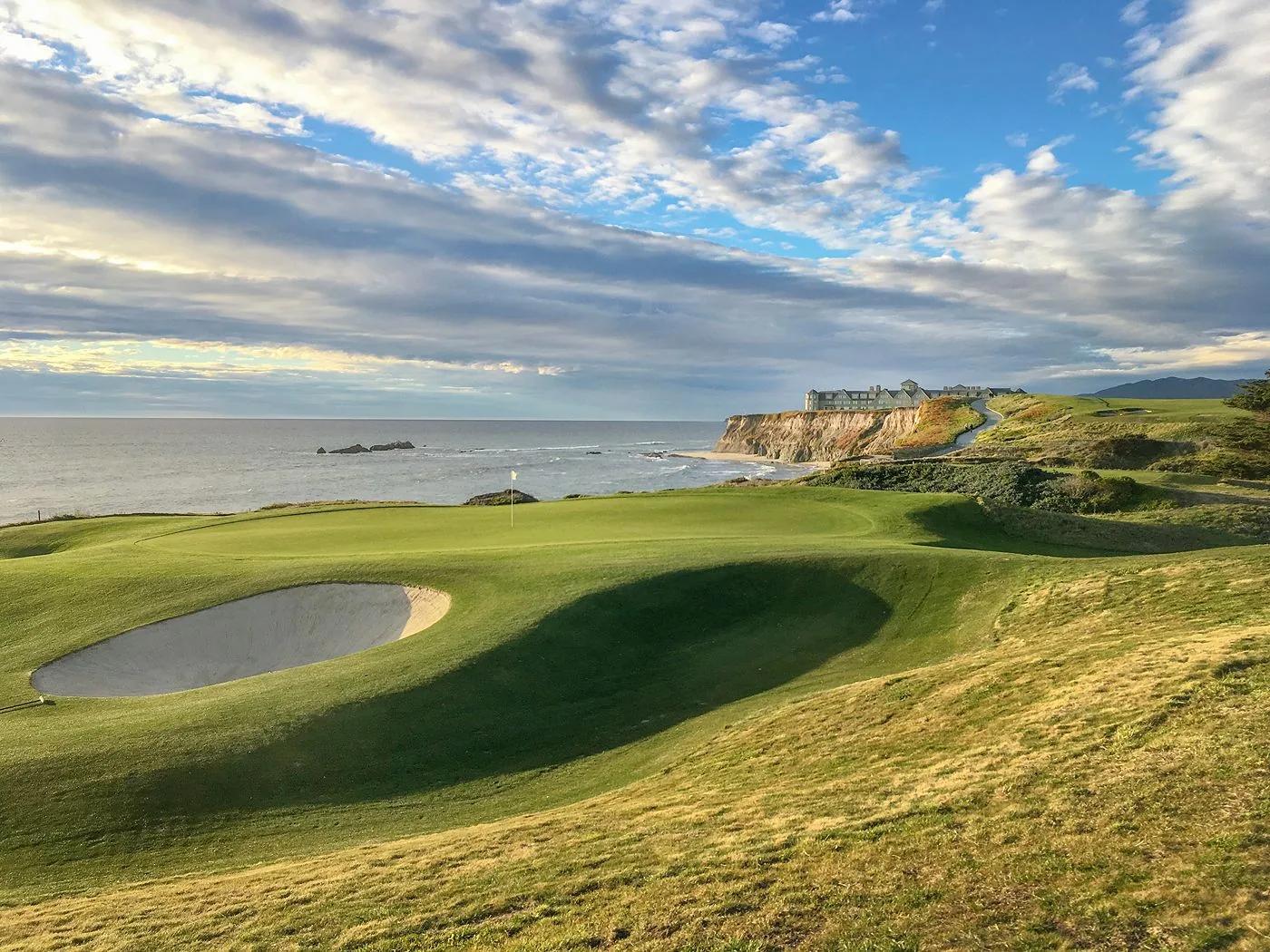
The Ocean Course is one of two 18-hole courses at Half Moon Bay Golf Links, beside The Ritz-Carlton, Half Moon Bay, and the one built as a links: firm, open fairways, native grasses, onshore wind and coastal fog, with the Pacific in view from nearly every hole. It plays 6,914 yards from the Black tees at 72.5/132. The public can book up to 120 days ahead, and there is no full driving range.
History
Half Moon Bay Golf Links — Ocean Course — History
Opened in 1997, the Ocean Course was Arthur Hills's addition to a property that already held the 1973 Arnold Palmer and Francis Duane layout, now called the Old Course. The club says its 16th, a par 4 played from an elevated tee with ocean views, has served as the stage for television commercials for Callaway Golf and Corona.
Design
Half Moon Bay Golf Links — Ocean Course — Design
Hills worked in a traditional links style, the club says, with wide, firm fairways, native grasses and wildflowers, and real elevation change. Barrancas and ravines cut across the land, forcing carries on the 2nd, 16th and 17th, and the 18th tee shot crosses the Cañada Verde Creek canyon. Hills even paired the 4th and 5th as a single par 9: a reachable par 5 followed by a hole into the prevailing wind.
What Sets It Apart
Why Play Half Moon Bay Golf Links — Ocean Course
The Ocean Course is a public links on the Pacific bluffs south of San Francisco that finishes with three oceanside holes, including a 17th the club says some compare to Pebble Beach's 7th.
The Round
The Journey at Half Moon Bay Golf Links — Ocean Course
I.
The Opening
The 1st shares its fairway with the 18th and has three bunkers, one hidden from the tee, around a very undulating green. The 2nd needs only a fairway wood or iron to carry a barranca, and the short 3rd, a par 3, plays into the wind to a deep green. Hills called the 4th and 5th a par 9: the 4th is a short, reachable par 5, the 5th heads into the prevailing wind. The 6th turns downwind.
II.
The Middle
A large pond defends the 7th and must be carried in full from the tee. The 8th is a par 5 with a big green tilting left to right and a collection area short. The uphill 9th, a par 3, is the farthest point from the clubhouse. The 10th, a par 5, is usually three shots into the wind, the 11th is a strong par 4, and the 12th is a par 3 with a slope on the left that feeds balls onto a very deep green.
III.
The Finish
The 13th climbs to an elevated two-tier green where level putts break toward the ocean. The 14th, an uphill but downwind par 5, is reachable in two, and the 15th has out of bounds left and a severe slope before the green. Then the bluffs: the 16th, a par 4 from a high tee, needs a full carry over a barranca, the par-3 17th sits above the Pacific with a ravine short, and the par-5 18th starts over the Cañada Verde Creek canyon.
How to Play It
Half Moon Bay Golf Links — Ocean Course — Playing Strategy
Beginner / High Handicap
The forced carries are the main issue for a first-timer, and a forward set makes them manageable; from the Black tees the course rates 72.5/132. On the 2nd, a fairway wood or iron is enough to clear the barranca. Keep right on the 15th, where out of bounds runs left, and on the 17th favor the collection area to the right over the ravine short of the green.
Intermediate / Mid Handicap
Wind dictates the round. The 3rd, 5th and 10th usually play into it, while the 6th and 14th are downwind, and the 14th is reachable in two. Treat the 4th and 5th as the par 9 Hills intended and take the birdie chance on the 4th. On the 13th, remember that level putts break toward the ocean.
Advanced / Low Handicap
The scoring holes are the reachable par 5s, the 4th, 14th and, for strong players, the 18th, which can be reached in two after a drive over the Cañada Verde canyon. The 16th approach must carry a barranca, and a ridge runs through the 17th green, so the tee shot has to find the correct side. Expect onshore wind and coastal fog to change distances.
Signature Holes
Half Moon Bay Golf Links — Ocean Course — Signature Holes
The Card
Half Moon Bay Golf Links — Ocean Course Scorecard
| Hole | 1 | 2 | 3 | 4 | 5 | 6 | 7 | 8 | 9 | Out | 10 | 11 | 12 | 13 | 14 | 15 | 16 | 17 | 18 | In | Total |
|---|---|---|---|---|---|---|---|---|---|---|---|---|---|---|---|---|---|---|---|---|---|
| Par | 4 | 4 | 3 | 5 | 4 | 4 | 3 | 5 | 3 | 35 | 5 | 4 | 3 | 4 | 5 | 4 | 4 | 3 | 5 | 37 | 72 |
| Yards | 394 | 344 | 150 | 526 | 465 | 407 | 172 | 526 | 180 | 3,164 | 565 | 437 | 220 | 470 | 527 | 411 | 403 | 184 | 533 | 3,750 | 6,914 |
| Handicap | — | — | — |
Good to Know
Half Moon Bay Golf Links — Ocean Course — questions answered
- How do I book a tee time at Half Moon Bay Golf Links — Ocean Course?
- Half Moon Bay Golf Links — Ocean Course takes tee-time bookings directly on its own website. Golf in CA links the course's booking page on this listing.
- Who designed Half Moon Bay Golf Links — Ocean Course?
- Half Moon Bay Golf Links — Ocean Course was designed by Arthur Hills and opened in 1997.
- What is the par and yardage at Half Moon Bay Golf Links — Ocean Course?
- Half Moon Bay Golf Links — Ocean Course plays to a par of 72 over 6,914 yards from the championship tees, with a course rating of 72.5 and a slope of 132.
- Is Half Moon Bay Golf Links — Ocean Course public or private?
- Half Moon Bay Golf Links — Ocean Course is open to public play. Tee times can be reserved in advance.
- Where is Half Moon Bay Golf Links — Ocean Course located?
- Half Moon Bay Golf Links — Ocean Course is located at 2 Miramontes Point Rd, Half Moon Bay, CA 94019, in the Bay Area area of California.
More in Bay Area
More golf courses in Bay Area
Arnold Palmer and Francis Duane · Half Moon Bay
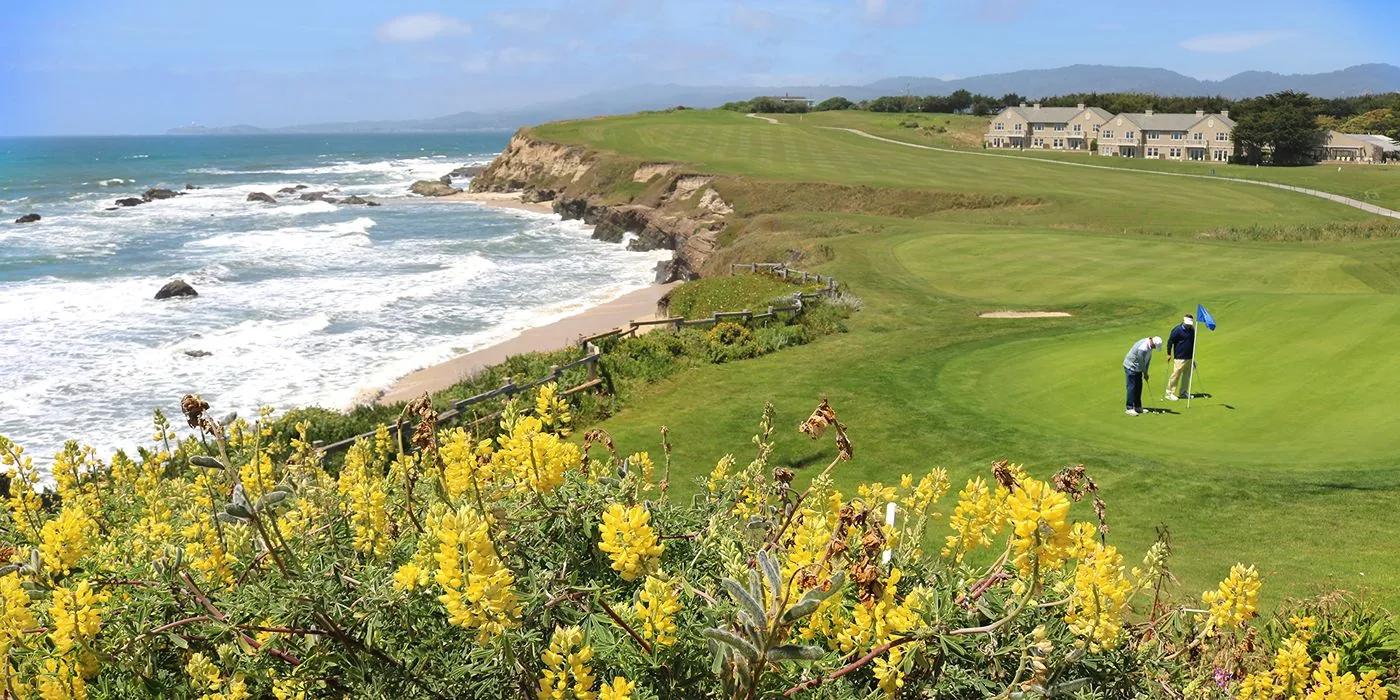
Half Moon Bay Golf Links — Old Course
Arnold Palmer and Francis Duane's 1973 parkland course, finishing on the Pacific at Half Moon Bay.
Kyle Phillips · Woodside
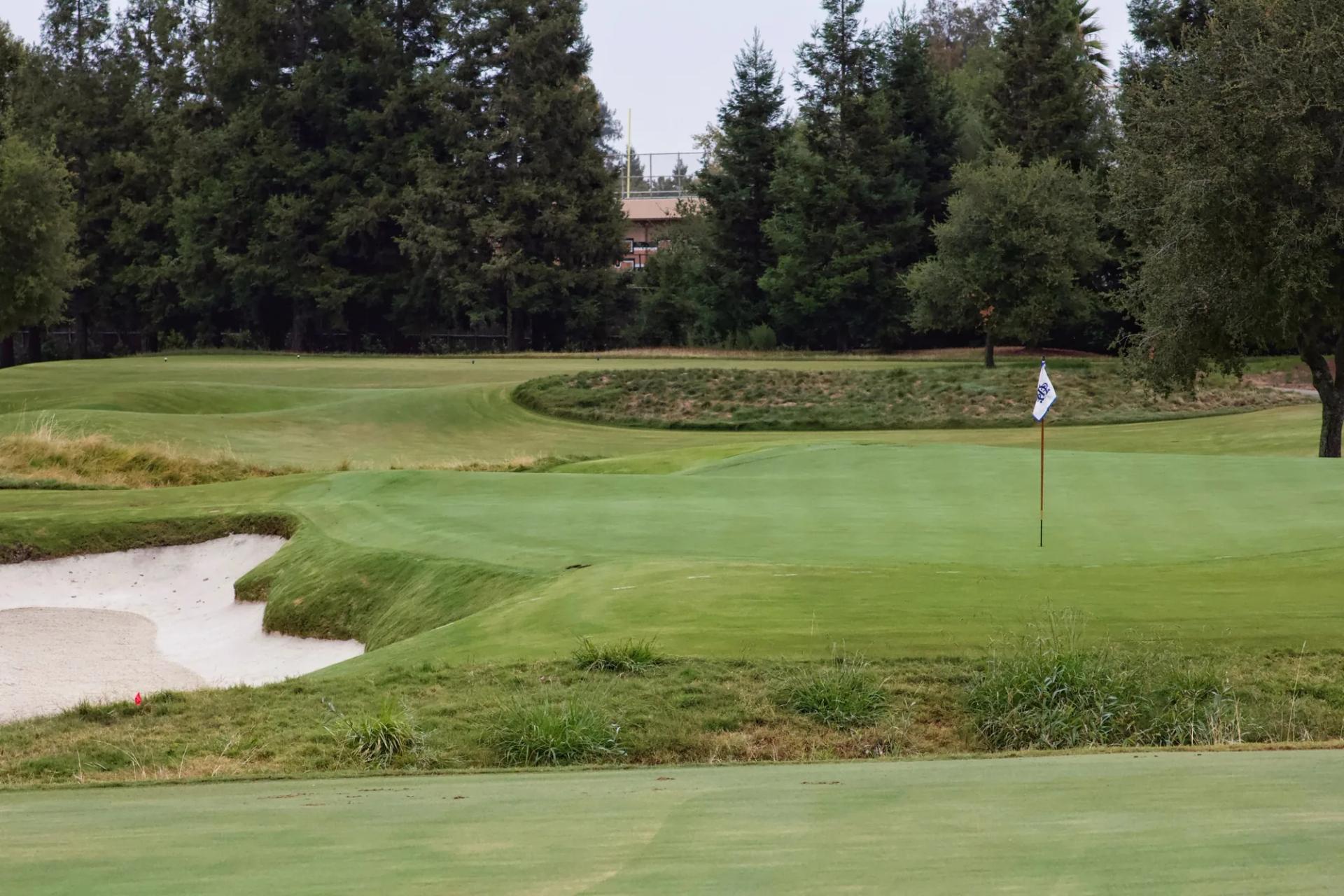
Menlo Country Club
A private Woodside club founded in 1904, its course redesigned by Kyle Phillips in 2014.
Jack Fleming · Menlo Park
Sharon Heights Golf & Country Club
A private Menlo Park club on Sand Hill Road, its 1962 course remade by Todd Eckenrode.
How to Play It
Book a Tee Time at Half Moon Bay Golf Links — Ocean Course.
Half Moon Bay Golf Links — Ocean Course takes its tee sheet directly — book your round on the club's own site.
Golf in CA is an independent guide — we don’t sell tee times or mark them up. We map the exact way on.