
Invitation & Access · Palm Springs
Stone Eagle Golf ClubPalm Desert
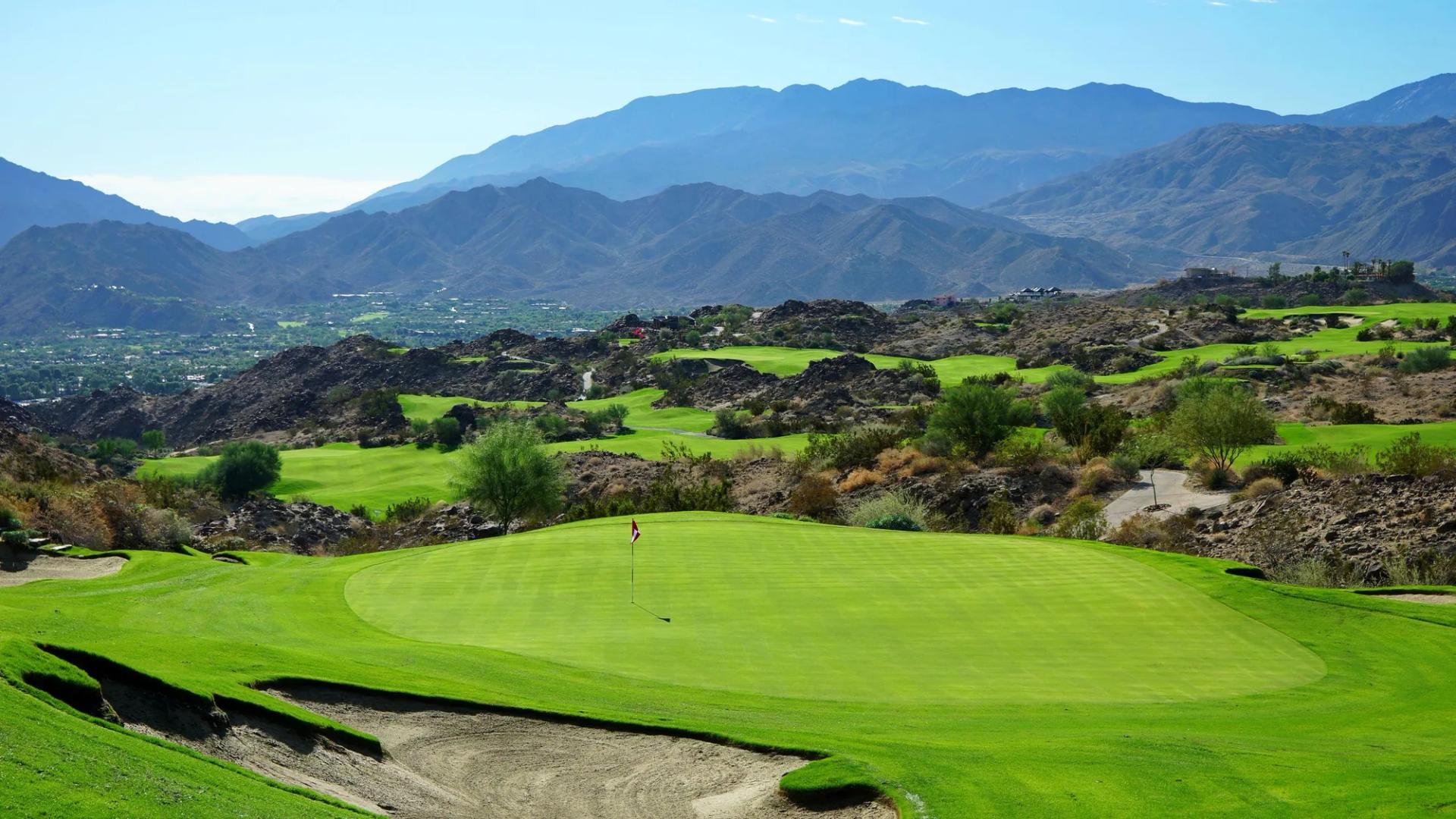
Tom Doak's rugged private course on a rocky plateau above Palm Desert, opened in 2005.
Par
71
Yardage
7,012
Rating · Slope
74.0 · 140
Holes
18
Green Fee
Members only
The Course
About Stone Eagle Golf Club
Set inside the Santa Rosa and San Jacinto Mountains National Monument above Palm Desert, Stone Eagle is a private club for members and their guests. Tom Doak's course climbs through ravines, arroyos and boulder fields with no homes along the fairways, and members walk or ride with no tee-time system. The card reads par 71 and 7,012 yards from the Black tees, with a 74.0 rating and 140 slope. Guests play with a member and are asked to finish in four hours.
History
Stone Eagle Golf Club — History
Stone Eagle opened in November 2005. Seven families bought the club in 2010, and the ownership has since added a set of shorter tees, a new set of back tees and an improved short-game area. Architect Guy Dreier designed the Aerie, the members' restaurant overlooking the course, in a 2015-16 project. A bonus par-3 hole of 151 yards serves as a 19th for settling ties.
Design
Stone Eagle Golf Club — Design
Golf Digest describes a rocky plateau about 1,000 feet above the Coachella Valley, where Doak, free of homesites, built a faux links by tucking fairways into creases in the land and playing shots over low ridges into bold greens. He used slopes of rock and boulders the way links architects use dunes. The club describes his approach as minimalist, and Planet Golf finds the greens boldly shaped, the opener's long, humped surface most of all.
What Sets It Apart
Why Play Stone Eagle Golf Club
Set higher into the rocky hills than most courses in the region, with no homes along its fairways, Stone Eagle is a Tom Doak course that uses boulders and arroyos the way links use dunes.
The Round
The Journey at Stone Eagle Golf Club
I.
The Opening
The 418-yard 1st finishes on a long green crossed by humps, its back-right portion banked to receive a bold approach. The 398-yard 2nd climbs and plays longer than its yardage, and the 175-yard 3rd sits high on the mountain. The 484-yard 4th starts with a downhill drive that runs a long way unless it strays into the canyon on the left, and the 423-yard 5th, the No. 1 handicap, hugs a deep ravine from tee to green.
II.
The Middle
The 364-yard 6th, the shortest par 4, climbs along a hill to a green in a rocky gap. The 218-yard 7th drops toward the looming mountain, and the 518-yard 8th is usually played as a three-shotter rather than carrying the mouth of a ravine. The 9th has a double-decked fairway, the 386-yard 10th runs straight uphill into a canyon, the 11th green funnels left behind a rock outcrop, and the 153-yard 12th is a postage stamp on the mountainside.
III.
The Finish
The 586-yard 13th, the longest hole, crosses one ravine, with another lurking right for long hitters. On the 415-yard 14th the second shot either attacks a green behind deep bunkers or crosses an arroyo, and the 185-yard 15th green hangs over that arroyo's rim. The 560-yard 17th asks for a second shot through a gap in the rocks, and the 499-yard 18th, the No. 2 handicap, heads back down the mountain.
How to Play It
Stone Eagle Golf Club — Playing Strategy
Beginner / High Handicap
Ravines and arroyos account for much of the 140 slope from the Black tees, so a forward set is wise for guests. Take the three-shot route on the 8th, stay short of the ravine with the drive on the 13th, and add club on the uphill 2nd and 10th. Keep moving, too, since the club asks for a four-hour pace.
Intermediate / Mid Handicap
Bold greens decide most rounds, so approach position matters more than distance off the tee. Land in the high back-right on the 1st, favor the right side of the double-decked 9th fairway, come in from the right on the 16th to skirt the rocks near the green, and on the 17th decide early whether to thread the rock gap or lay up.
Advanced / Low Handicap
Stone Eagle (74.0/140) rewards a player who can shape the ball around rock and ravine. Long hitters can use the downhill 4th for a shorter approach, but anything left finds the canyon. The 13th tempts a big drive past the first ravine toward the second, and the 18th, at 499 yards, is a final test of nerve.
Signature Holes
Stone Eagle Golf Club — Signature Holes
The Card
Stone Eagle Golf Club Scorecard
| Hole | 1 | 2 | 3 | 4 | 5 | 6 | 7 | 8 | 9 | Out | 10 | 11 | 12 | 13 | 14 | 15 | 16 | 17 | 18 | In | Total |
|---|---|---|---|---|---|---|---|---|---|---|---|---|---|---|---|---|---|---|---|---|---|
| Par | 4 | 4 | 3 | 4 | 4 | 4 | 3 | 5 | 4 | 35 | 4 | 4 | 3 | 5 | 4 | 3 | 4 | 5 | 4 | 36 | 71 |
| Yards | 418 | 398 | 175 | 484 | 423 | 364 | 218 | 518 | 418 | 3,416 | 386 | 411 | 153 | 586 | 415 | 185 | 401 | 560 | 499 | 3,596 | 7,012 |
| Handicap | 13 | 5 | 17 | 3 | 1 | 9 | 7 | 11 | 15 | — | 8 | 16 | 18 | 6 | 4 | 10 | 14 | 12 | 2 | — | — |
Good to Know
Stone Eagle Golf Club — questions answered
- How do I get on Stone Eagle Golf Club?
- Stone Eagle Golf Club is a private club — play is reserved for members and their guests. The only way on is a membership or a member's invitation; there is no public tee sheet.
- Who designed Stone Eagle Golf Club?
- Stone Eagle Golf Club was designed by Tom Doak and opened in 2005.
- What is the par and yardage at Stone Eagle Golf Club?
- Stone Eagle Golf Club plays to a par of 71 over 7,012 yards from the championship tees, with a course rating of 74.0 and a slope of 140.
- Is Stone Eagle Golf Club public or private?
- Stone Eagle Golf Club is a private member club — not open to public play. Access is by membership or a member's invitation; there is no public tee sheet.
- Where is Stone Eagle Golf Club located?
- Stone Eagle Golf Club is located at 72500 Stone Eagle Dr, Palm Desert, CA 92260, in the Palm Springs area of California.
More in Palm Springs
More golf courses in Palm Springs
Tom Fazio · Palm Desert
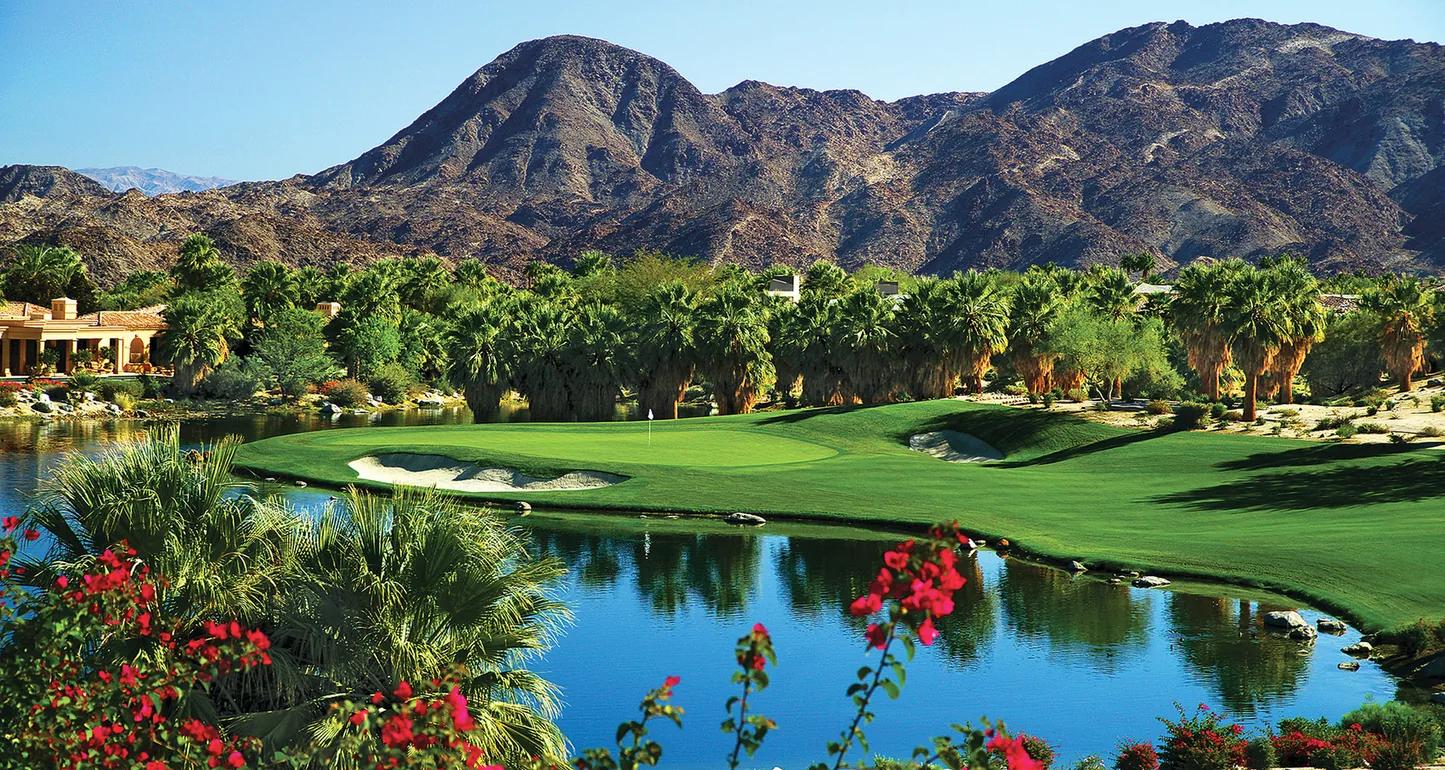
BIGHORN Golf Club — Canyons Course
Tom Fazio's Canyons course at BIGHORN, a private desert club in the Santa Rosa foothills.
Arthur Hills · Palm Desert
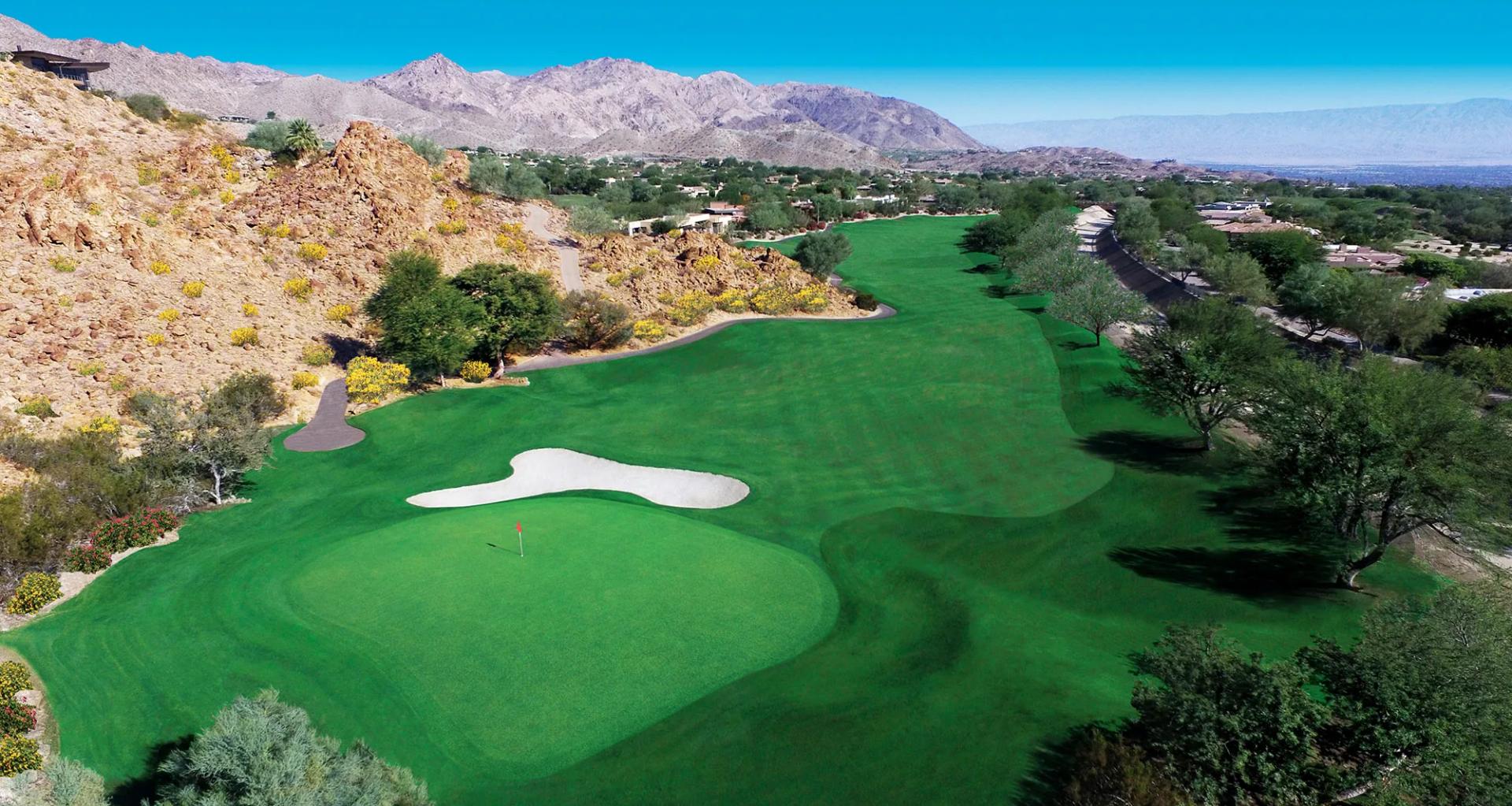
BIGHORN Golf Club — Mountains Course
Arthur Hills' original BIGHORN course above Palm Desert, Skins Game host from 1992 to 1995.
Tom Weiskopf and Jay Morrish · Indian Wells
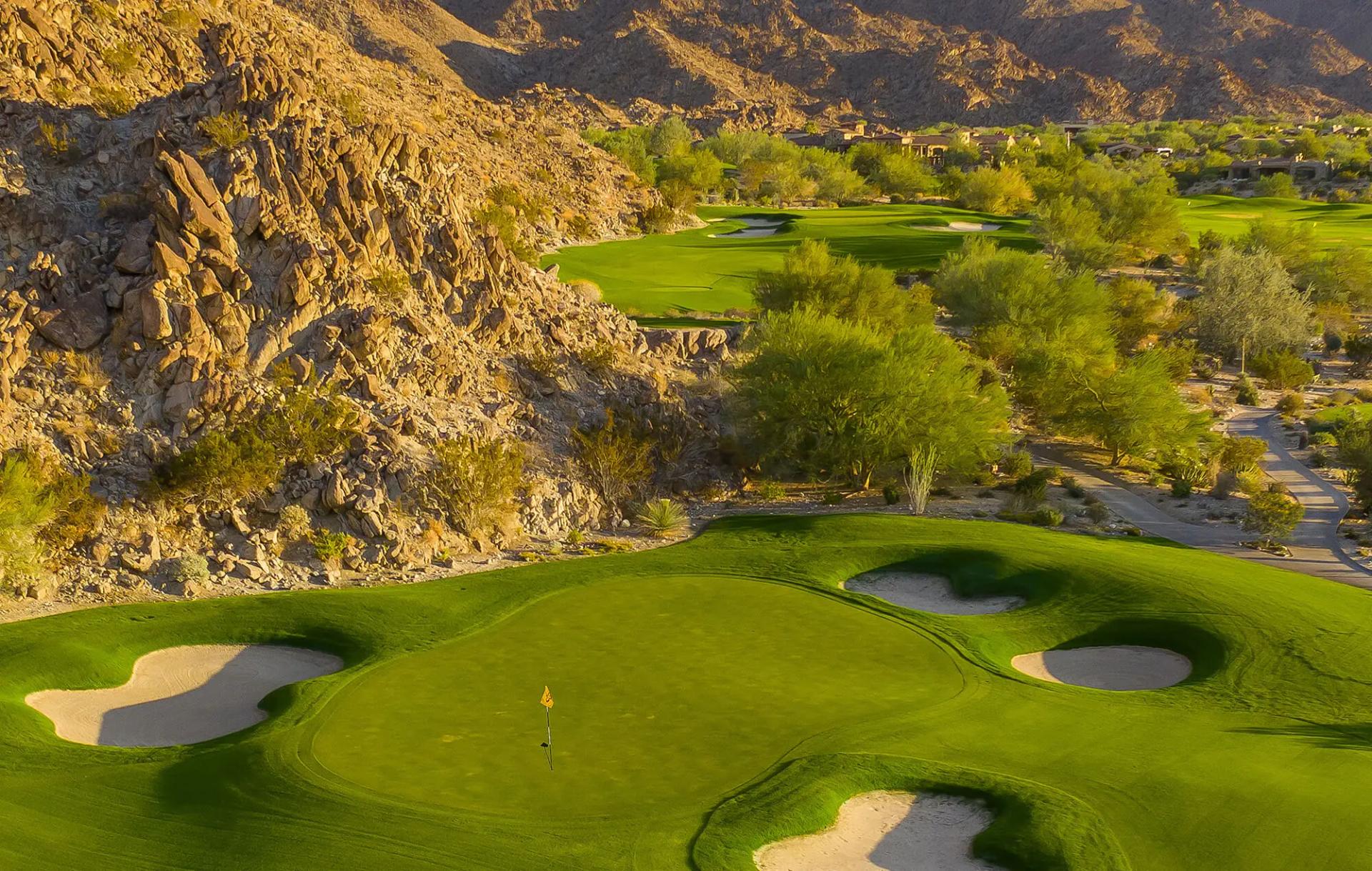
The Reserve Club
Weiskopf and Morrish's 21-hole private course in the Indian Wells foothills, opened in 1998.
How to Play It
How to Play Stone Eagle Golf Club.
Stone Eagle Golf Club is a private club — play is reserved for members and their guests, with no public tee sheet. The only way on is a membership or a member's invitation.
Golf in CA is an independent guide — we don’t sell tee times or mark them up. We map the exact way on.