Invitation & Access · Palm Springs
The Hideaway Golf Club — Pete Dye CourseLa Quinta
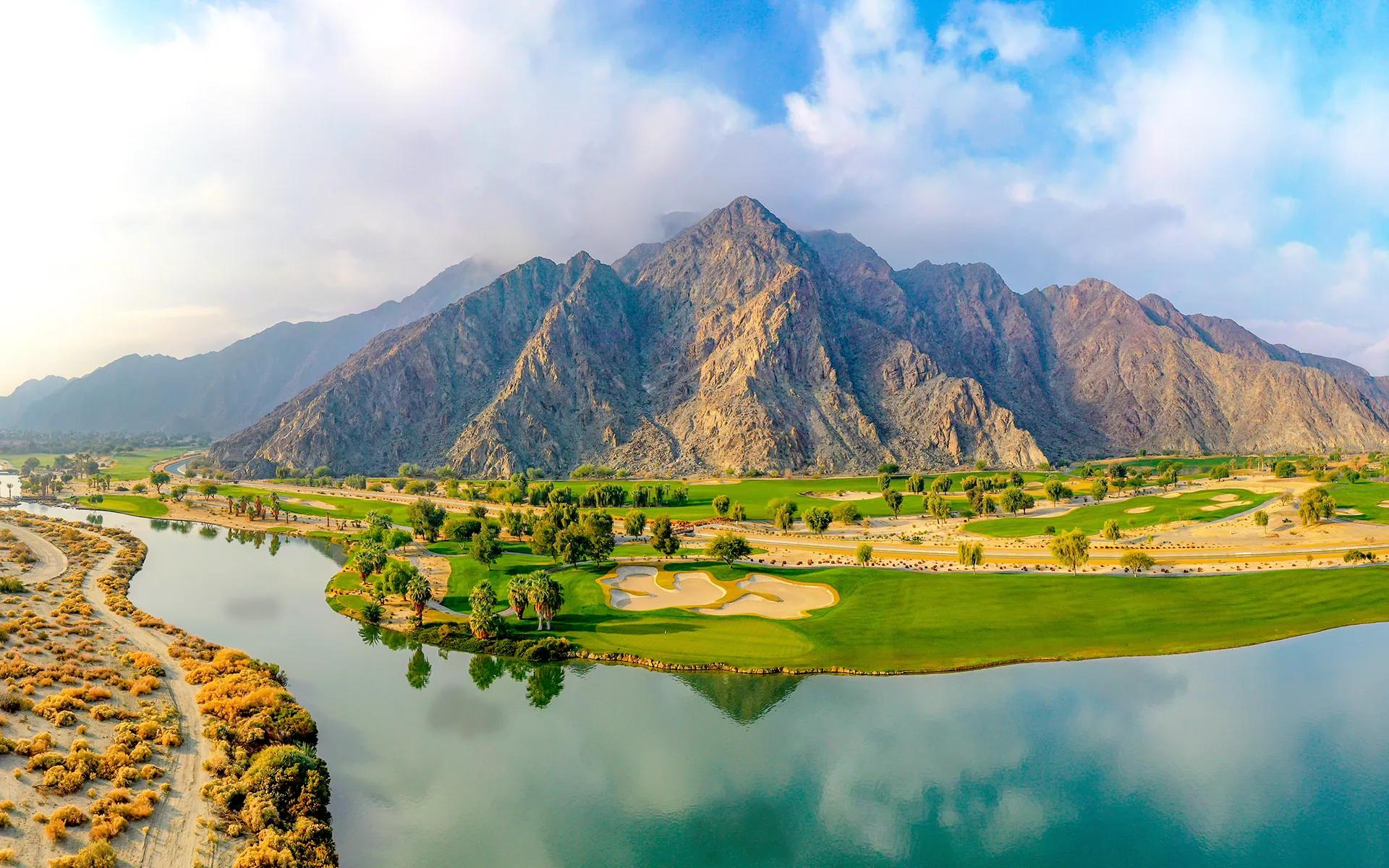
Pete Dye's links-inspired 2001 course at The Hideaway in La Quinta, restored by Tim Liddy.
Par
72
Yardage
7,133
Rating · Slope
74.7 · 142
Holes
18
Green Fee
Members only
The Course
About The Hideaway Golf Club — Pete Dye Course
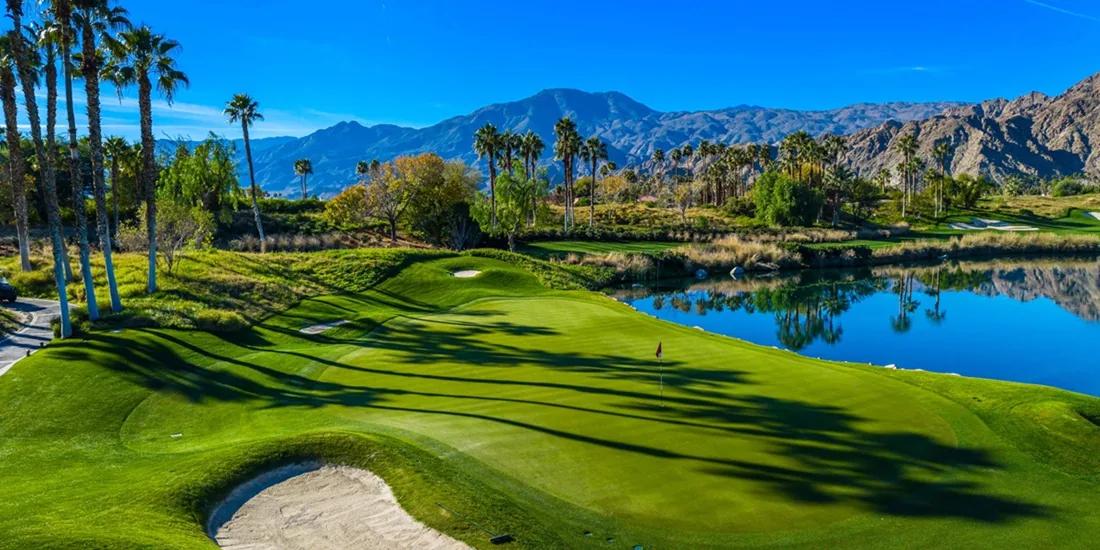
The Pete Dye Course was the first of The Hideaway's two 18s and is the more rugged of the pair. It is a private club course for members and their guests, with membership limited to 225 per course. Rolling fairways run between native grasses, wide strips of sand, streams and ponds, and from the I tees it plays 7,133 yards, par 72, rated 74.7 with a 142 slope, the stiffer test of the two.
History
The Hideaway Golf Club — Pete Dye Course — History
Pete Dye designed the first course at The Hideaway, a Discovery Land Company community, and it was completed in 2001. In summer 2024 Tim Liddy, who worked alongside Dye for nearly three decades, restored the greens and upgraded the bunkers as part of a clubwide renovation that ran until January 2026. Liddy added Spectacle bunkers, the railroad-style hazards the club likens to those at St Andrews and Carnoustie.
Design
The Hideaway Golf Club — Pete Dye Course — Design
The club calls the course links-inspired: each hole is a rolling fairway bordered by native grasses that gives way to sand or to streams and ponds, and sand and water begin or end every hole, either lining the green or spreading in front of elevated tees. Liddy's 2024 restoration recovered the greens and introduced Spectacle bunkers to sharpen the strategy.
What Sets It Apart
Why Play The Hideaway Golf Club — Pete Dye Course
The Hideaway's original course is also its stiffer test, at 74.7/142 from the I tees, and Liddy's 2024 restoration gave it Spectacle bunkers modeled on those at St Andrews and Carnoustie.
The Round
The Journey at The Hideaway Golf Club — Pete Dye Course
I.
The Opening
Three par 4s between 373 and 418 yards open the round, and the 373-yard 3rd rates as the easiest hole on the card. The 552-yard 4th is the first par 5, and the 472-yard 5th, the longest par 4 and the No. 4 handicap, follows. The 167-yard 6th is the shortest par 3, ending an opening stretch that starts gently and builds.
II.
The Middle
The 576-yard 7th is the longest hole, followed by the 170-yard 8th and the 452-yard 9th, the No. 2 handicap, which completes a 3,593-yard front nine. The back opens with par 4s of 439 and 442 yards at the 10th and 11th, then the 198-yard 12th, the third par 3 of the round.
III.
The Finish
The 501-yard 13th is the shortest par 5 and a chance to score, but the 454-yard 14th that follows is the No. 1 handicap. The 324-yard 15th is the shortest par 4, the 418-yard 16th leads to the 229-yard 17th, the longest par 3, and the 535-yard 18th, the No. 3 handicap, makes for a demanding par-5 finish.
How to Play It
The Hideaway Golf Club — Pete Dye Course — Playing Strategy
Beginner / High Handicap
The Dye course carries the higher slope of the club's two, 142 from the I tees, so first-time guests should move up a set. With sand and water framing every hole, aim for the wide part of each fairway, lay up on the par 5s, and accept a bogey on the 14th, the hardest hole.
Intermediate / Mid Handicap
Par is protected late: the 14th, 17th and 18th form a hard finish after the shorter 13th and 15th. Score on those two, play the 229-yard 17th to the safe side of the green, and treat the 18th as a three-shot hole. On the front, the 3rd is the clearest birdie chance.
Advanced / Low Handicap
The four par 5s run from 501 to 576 yards, and the 13th is the realistic eagle chance. Elsewhere the 472-yard 5th and 454-yard 14th demand long irons into greens Liddy restored in 2024. Pick lines that keep sand and water out of the approach, since both frame the greens.
Signature Holes
The Hideaway Golf Club — Pete Dye Course — Signature Holes
The Card
The Hideaway Golf Club — Pete Dye Course Scorecard
| Hole | 1 | 2 | 3 | 4 | 5 | 6 | 7 | 8 | 9 | Out | 10 | 11 | 12 | 13 | 14 | 15 | 16 | 17 | 18 | In | Total |
|---|---|---|---|---|---|---|---|---|---|---|---|---|---|---|---|---|---|---|---|---|---|
| Par | 4 | 4 | 4 | 5 | 4 | 3 | 5 | 3 | 4 | 36 | 4 | 4 | 3 | 5 | 4 | 4 | 4 | 3 | 5 | 36 | 72 |
| Yards | 413 | 418 | 373 | 552 | 472 | 167 | 576 | 170 | 452 | 3,593 | 439 | 442 | 198 | 501 | 454 | 324 | 418 | 229 | 535 | 3,540 | 7,133 |
| Handicap | 8 | 10 | 18 | 12 | 4 | 16 | 6 | 14 | 2 | — | 9 | 5 | 13 | 15 | 1 | 17 | 7 | 11 | 3 | — | — |
Good to Know
The Hideaway Golf Club — Pete Dye Course — questions answered
- How do I get on The Hideaway Golf Club — Pete Dye Course?
- The Hideaway Golf Club — Pete Dye Course is a private club — play is reserved for members and their guests. The only way on is a membership or a member's invitation; there is no public tee sheet.
- Who designed The Hideaway Golf Club — Pete Dye Course?
- The Hideaway Golf Club — Pete Dye Course was designed by Pete Dye and opened in 2001.
- What is the par and yardage at The Hideaway Golf Club — Pete Dye Course?
- The Hideaway Golf Club — Pete Dye Course plays to a par of 72 over 7,133 yards from the championship tees, with a course rating of 74.7 and a slope of 142.
- Is The Hideaway Golf Club — Pete Dye Course public or private?
- The Hideaway Golf Club — Pete Dye Course is a private member club — not open to public play. Access is by membership or a member's invitation; there is no public tee sheet.
- Where is The Hideaway Golf Club — Pete Dye Course located?
- The Hideaway Golf Club — Pete Dye Course is located at 80440 Hideaway Club Ct, La Quinta, CA 92253, in the Palm Springs area of California.
More in Palm Springs
More golf courses in Palm Springs
Clive Clark · La Quinta
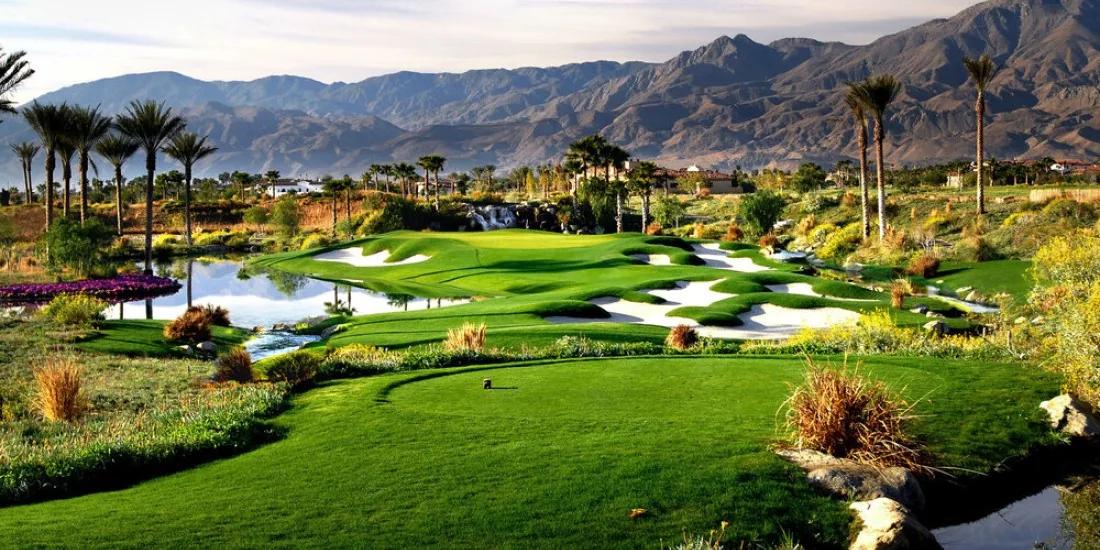
The Hideaway Golf Club — Clive Clark Course
Clive Clark's waterfall-lined private course at The Hideaway, a member-owned club in La Quinta.
Tom Fazio · La Quinta
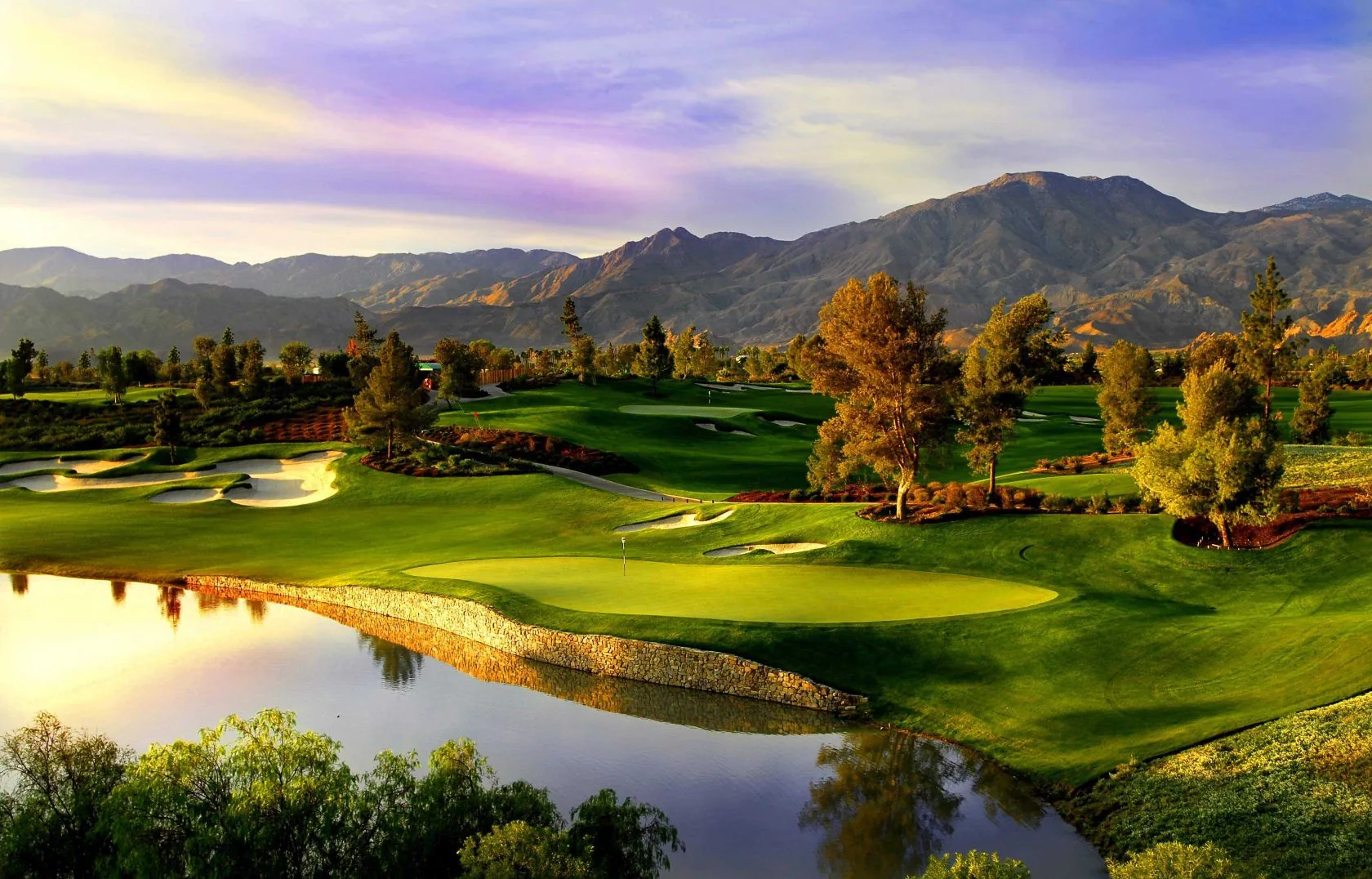
The Madison Club
Tom Fazio's private course at The Madison Club, a Discovery Land community in La Quinta.
Arnold Palmer · La Quinta
SilverRock Resort — Arnold Palmer Classic Course
La Quinta's city-owned Arnold Palmer course, a former Bob Hope Classic venue below the Santa Rosas.
How to Play It
How to Play The Hideaway Golf Club — Pete Dye Course.
The Hideaway Golf Club — Pete Dye Course is a private club — play is reserved for members and their guests, with no public tee sheet. The only way on is a membership or a member's invitation.
Golf in CA is an independent guide — we don’t sell tee times or mark them up. We map the exact way on.