
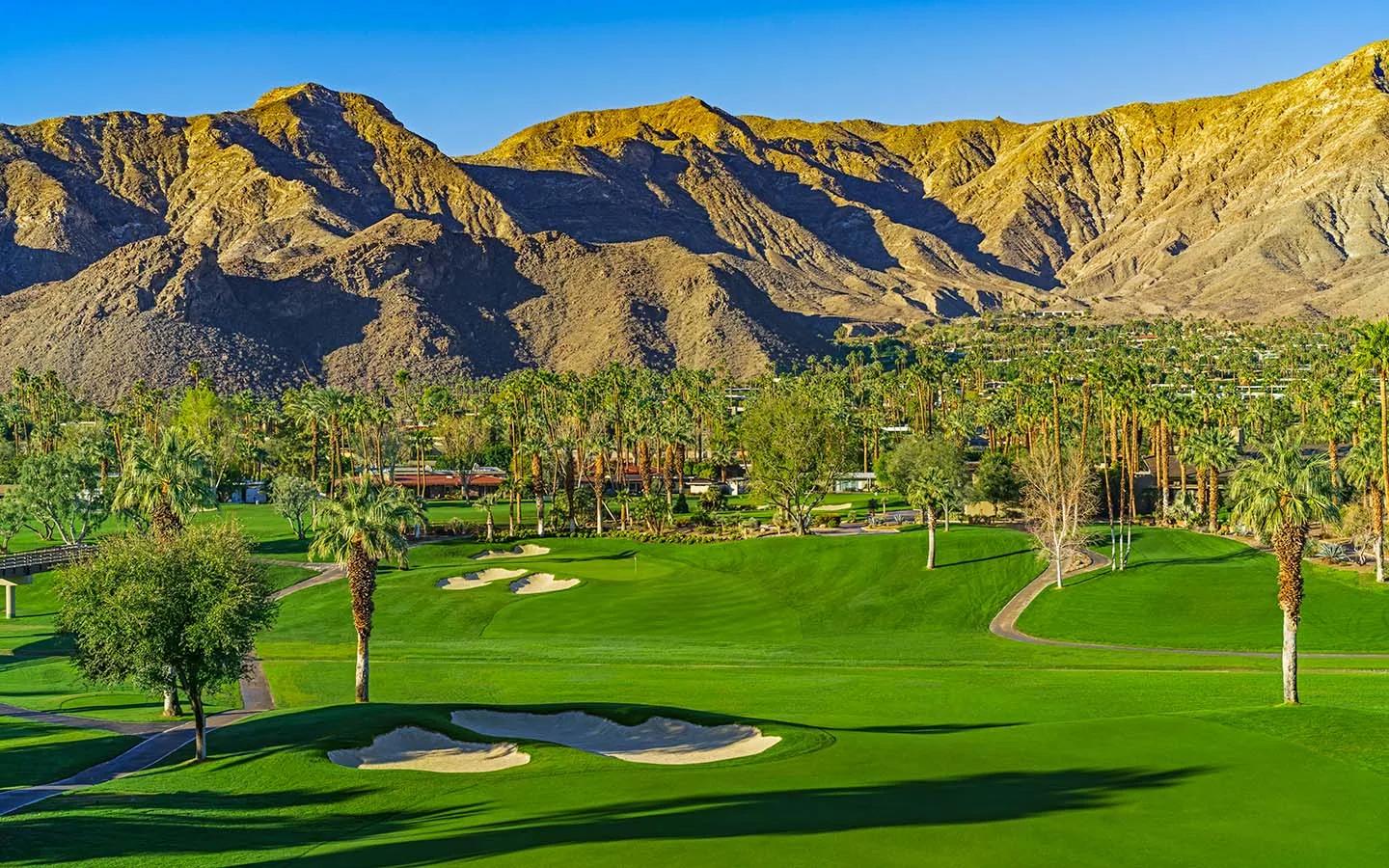
Invitation & Access · Palm Springs
Thunderbird Country ClubRancho Mirage
The Coachella Valley's first 18-hole course, opened in 1951 and host of the 1955 Ryder Cup.
Par
71
Yardage
6,755
Rating · Slope
72.7 · 134
Holes
18
Green Fee
Members only
The Course
About Thunderbird Country Club
A private club for members and their guests, Thunderbird requires guests to play with a member unless they are staying in the club's cottages in Rancho Mirage. The course is a 1950s-style layout of grass and trees rather than desert, refreshed by Tripp Davis in 2021-22 to recover its original character. From the Ryder Cup tees it plays 6,755 yards, par 71, rated 72.7 with a 134 slope.
History
Thunderbird Country Club — History
Johnny Dawson, looking for land for the desert's first 18-hole course, approached Frank Bogert about buying his Thunderbird Ranch, a dude ranch, and on January 9, 1951, architect Lawrence Hughes and Dawson hit the first balls. It hosted the 1955 Ryder Cup and the first three Palm Springs Golf Classics, from 1960 to 1962. Ted Robinson renovated it in 1980, and Tripp Davis's restoration reopened to members in November 2022.
Design
Thunderbird Country Club — Design
Davis set out to restore rather than reinvent, taking cues from the original tees, bunkers and greens. In Golf Course Architecture he describes a classic bunker style, fairways with pitch and roll, greens with subtle strategic contour, and native soil brought up for firmer turf. Bunkers now press longer hitters while leaving higher handicaps room, and some artificial waterfalls and lake edges were removed to recover a 1950s look.
What Sets It Apart
Why Play Thunderbird Country Club
Thunderbird was the Coachella Valley's first 18-hole course, hosted the 1955 Ryder Cup, and is the birthplace of the desert's PGA TOUR event, which grew out of the Thunderbird Invitational and is now The American Express.
The Round
The Journey at Thunderbird Country Club
I.
The Opening
The 381-yard 1st offers a choice: drive near the right fairway bunkers for the best angle or play down the middle and avoid them. On the 451-yard 2nd, the longest par 4, a bold line down the right must miss a large tree. The 513-yard 3rd gained a left fairway bunker and a relocated greenside bunker, the 389-yard 4th plays over a ridge, the 418-yard 5th is the No. 1 handicap, and the 210-yard 6th has a reshaped green.
II.
The Middle
The 588-yard 7th, the longest hole and the No. 3 handicap, gives long hitters a direct line at the green in two. The 149-yard 8th, the shortest par 3, has new hole locations. The 405-yard 9th brings a reshaped lake into play for those who carry the right bunker. The 384-yard 10th, the No. 2 handicap, has a fairly flat green, the 392-yard 11th adds fairway bunkers, and the 291-yard 12th tempts a drive right toward a lake.
III.
The Finish
The 370-yard 13th has a two-tiered green and a downsized right fairway bunker. The 225-yard 14th, the longest par 3, was reshaped rather than rebuilt and hides a back-right sucker pin. The 581-yard 15th is a member favorite, and the 195-yard 16th plays to a renovated lake. A new stream crosses the 383-yard 17th, whose green and lake were enlarged, and the 430-yard 18th closes on one of the course's hardest greens.
How to Play It
Thunderbird Country Club — Playing Strategy
Beginner / High Handicap
Davis added tees to widen the range of lengths, so guests can find a set well short of the 6,755-yard Ryder Cup tees (72.7/134). Guests should aim for the center of fairways, where the bunkering leaves higher handicaps room, play short of the green on the 1st rather than drifting left, and lay up left on the 3rd to avoid the bunkers.
Intermediate / Mid Handicap
Firmer fairways now move the ball, so plan for roll. On the 5th, consider putting from chip range to leave an uphill putt; on the 13th, play short of the fairway bunker for a direct approach; and on the 16th, come in from the left even when the pin is back right. Aim for the center of the 9th green.
Advanced / Low Handicap
Thunderbird asks for angles more than length at 6,755 yards and 72.7/134. Carry the right fairway bunker on the 9th only if firm turf will not run the ball into the lake, drive left on the 11th to shorten it while knowing the green favors approaches from the right, and on the 14th play left of the back-right pin.
Signature Holes
Thunderbird Country Club — Signature Holes
The Card
Thunderbird Country Club Scorecard
| Hole | 1 | 2 | 3 | 4 | 5 | 6 | 7 | 8 | 9 | Out | 10 | 11 | 12 | 13 | 14 | 15 | 16 | 17 | 18 | In | Total |
|---|---|---|---|---|---|---|---|---|---|---|---|---|---|---|---|---|---|---|---|---|---|
| Par | 4 | 4 | 5 | 4 | 4 | 3 | 5 | 3 | 4 | 36 | 4 | 4 | 4 | 4 | 3 | 5 | 3 | 4 | 4 | 35 | 71 |
| Yards | 381 | 451 | 513 | 389 | 418 | 210 | 588 | 149 | 405 | 3,504 | 384 | 392 | 291 | 370 | 225 | 581 | 195 | 383 | 430 | 3,251 | 6,755 |
| Handicap | 11 | 7 | 9 | 13 | 1 | 15 | 3 | 17 | 5 | — | 2 | 10 | 16 | 4 | 14 | 12 | 18 | 8 | 6 | — | — |
Good to Know
Thunderbird Country Club — questions answered
- How do I get on Thunderbird Country Club?
- Thunderbird Country Club is a private club — play is reserved for members and their guests. The only way on is a membership or a member's invitation; there is no public tee sheet.
- Who designed Thunderbird Country Club?
- Thunderbird Country Club was designed by Lawrence Hughes and opened in 1951.
- What is the par and yardage at Thunderbird Country Club?
- Thunderbird Country Club plays to a par of 71 over 6,755 yards from the championship tees, with a course rating of 72.7 and a slope of 134.
- Is Thunderbird Country Club public or private?
- Thunderbird Country Club is a private member club — not open to public play. Access is by membership or a member's invitation; there is no public tee sheet.
- Where is Thunderbird Country Club located?
- Thunderbird Country Club is located at 70737 Country Club Dr, Rancho Mirage, CA 92270, in the Palm Springs area of California.
More in Palm Springs
More golf courses in Palm Springs
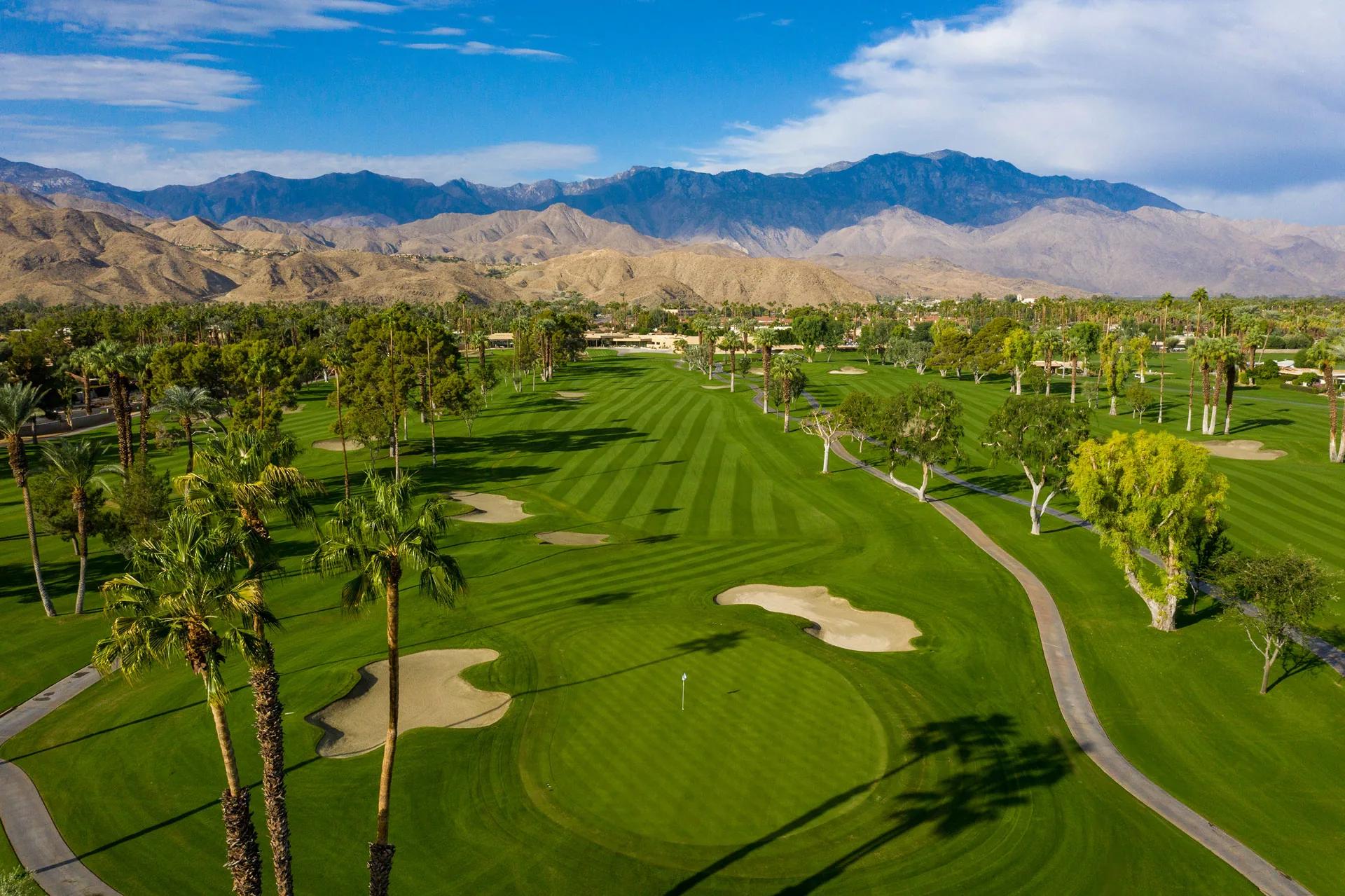
William P. Bell · Rancho Mirage
Tamarisk Country Club
William P. Bell's 1952 Rancho Mirage course, where Ben Hogan was the first head pro.
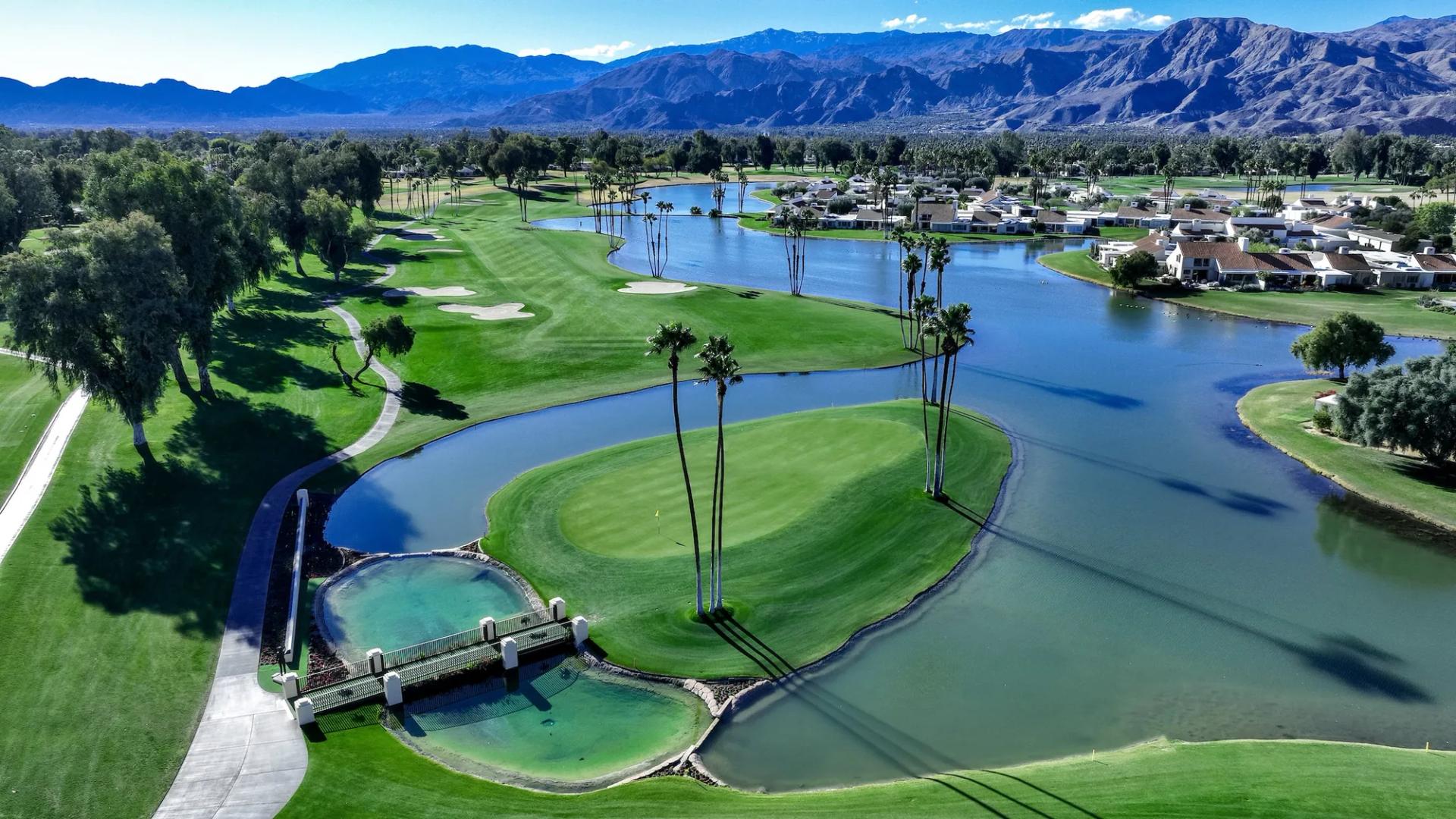
Desmond Muirhead · Rancho Mirage
Mission Hills Country Club — Dinah Shore Tournament Course
Desmond Muirhead's Mission Hills course, home of the Dinah Shore LPGA event from 1972 to 2022.
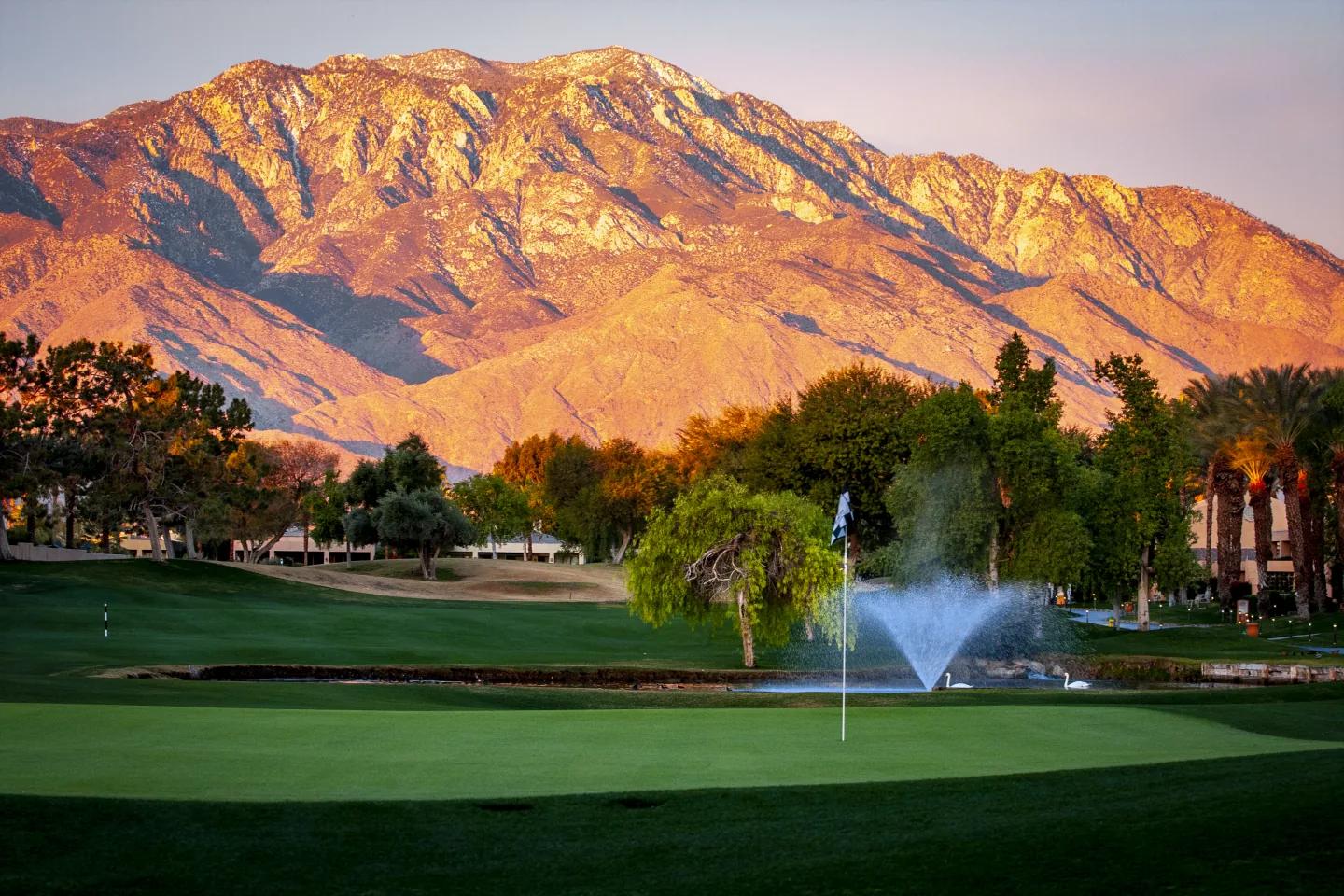
Pete Dye · Rancho Mirage
Westin Rancho Mirage Golf Resort — Pete Dye Resort Course
Pete Dye's 1987 par-70 resort course at the Westin Rancho Mirage, open to the public.
How to Play It
How to Play Thunderbird Country Club.
Thunderbird Country Club is a private club — play is reserved for members and their guests, with no public tee sheet. The only way on is a membership or a member's invitation.
Golf in CA is an independent guide — we don’t sell tee times or mark them up. We map the exact way on.