Invitation & Access · Monterey Peninsula
Cypress Point ClubPebble Beach
Alister MacKenzie's 1928 private links on 17-Mile Drive, home of the par-3 16th over the Pacific.
Par
72
Yardage
6,510
Rating · Slope
73.1 · 141
Holes
18
Green Fee
Members only
The Course
About Cypress Point Club
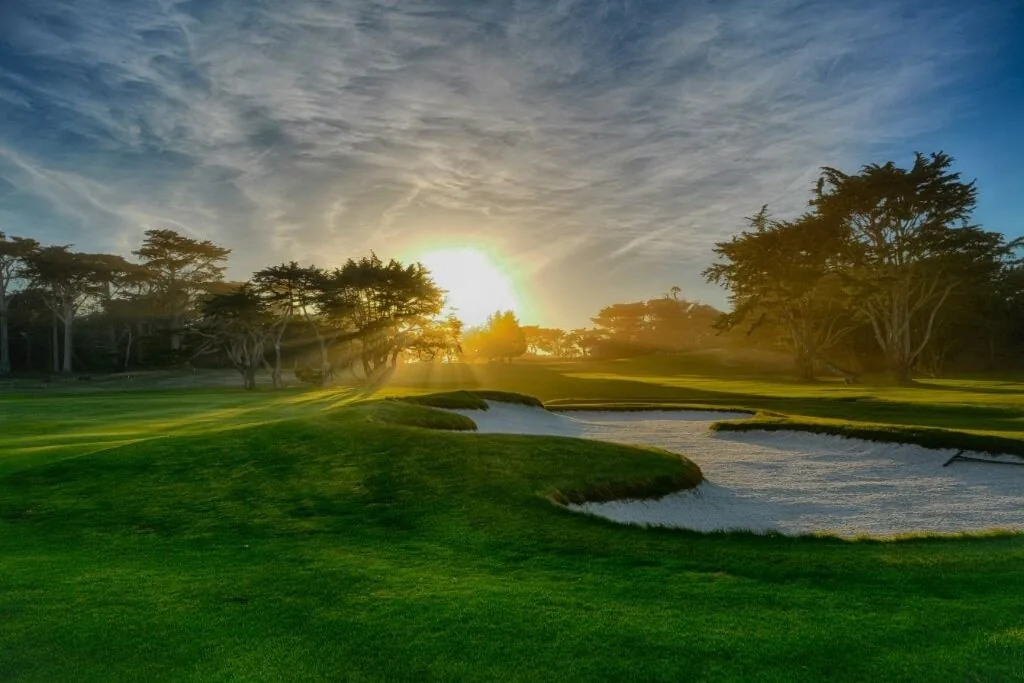
Along 17-Mile Drive in Pebble Beach, Cypress Point is a private club for members and their guests. Alister MacKenzie routed it through pine and cypress forest, sand dunes and rocky coastline, and the Blue tees play 6,510 yards and par 72, rated 73.1 with a 141 slope. LINKS estimates that about 30 golfers play it on an average day, and the club has no practice range.
History
Cypress Point Club — History
Organized in 1926 within Samuel F.B. Morse's Del Monte Forest plans, Cypress Point was first assigned to Seth Raynor, who died in 1926 with only preliminary plans done. Marion Hollins, who secured the land, recommended MacKenzie, who built it with Robert Hunter; play began on August 11, 1928. It was in the Crosby and AT&T Pebble Beach Pro-Am rotation from 1947 to 1990 and hosted the Walker Cup in 1981 and 2025.
Design
Cypress Point Club — Design
MacKenzie called the site a combination of rocky coast, sand dunes, pine woods and cypress trees he did not expect anyone to find again, and the routing uses each: inland holes on a wooded hillside, open holes through dunes and cliff-top holes on the ocean. The USGA's Walker Cup setup chief described a course of precision and creativity built to tempt players into something dangerous.
What Sets It Apart
Why Play Cypress Point Club
Cypress Point is among the most exclusive clubs in golf, and its 233-yard par-3 16th, played across the Pacific from cliff to cliff, may be the most photographed hole in the game.
The Round
The Journey at Cypress Point Club
I.
The Opening
The 417-yard 1st plays down into a valley and bends right, a severe start. The 555-yard 2nd, the longest hole and the No. 1 handicap, asks for a heroic diagonal carry off the tee. After the 157-yard 3rd and 382-yard 4th, the course heads onto a wooded hillside for the 5th through the 11th, beginning with back-to-back par 5s, the 491-yard 5th and 522-yard 6th, which open a risk-reward stretch.
II.
The Middle
The 170-yard 7th is followed by two short par 4s, the 356-yard 8th and the 292-yard 9th, which complete the risk-reward stretch and a par-37 front nine. The 477-yard 10th is the last par 5; the USGA planned to play it and the 5th as long par 4s at the 2025 Walker Cup. The 435-yard 11th ends the woodland holes, and the 405-yard 12th, the No. 2 handicap, turns toward the rocky shoreline.
III.
The Finish
After the 363-yard 13th and 394-yard 14th, the coast takes over. The 139-yard 15th and the 233-yard 16th make back-to-back par 3s; the 16th's tee and green sit just above the surf, with a broad bailout to the left. The 379-yard 17th has its own history, including a 14 by Ed Dougherty in 40 mph wind in 1990, and the 343-yard 18th climbs, partly blind, through a cypress grove to the clubhouse.
How to Play It
Cypress Point Club — Playing Strategy
Beginner / High Handicap
Wind can make Cypress Point play very hard one day and fairly gentle the next, and the Blue tees carry a 141 slope. A guest on a first visit should take the bailout left on the 16th rather than the direct carry, play the 2nd as three shots, and expect putts to break toward the ocean.
Intermediate / Mid Handicap
Four par 5s fall in the first ten holes, so scoring comes early: the 5th, 6th and 10th all measure under 525 yards. Through the wooded 5th to 11th, angles matter more than length, and the windswept 15th to 17th call for extra club and patience rather than aggression.
Advanced / Low Handicap
The card looks short at 6,510 yards, but the USGA's setup man says Cypress rewards precision and creativity over strength. The short par-4 8th and 9th sit inside the risk-reward stretch and tempt aggressive drives, while the 16th offers a direct line only to those who can carry its full length into the wind. Commit to a club there and accept the result.
Signature Holes
Cypress Point Club — Signature Holes
The Card
Cypress Point Club Scorecard
| Hole | 1 | 2 | 3 | 4 | 5 | 6 | 7 | 8 | 9 | Out | 10 | 11 | 12 | 13 | 14 | 15 | 16 | 17 | 18 | In | Total |
|---|---|---|---|---|---|---|---|---|---|---|---|---|---|---|---|---|---|---|---|---|---|
| Par | 4 | 5 | 3 | 4 | 5 | 5 | 3 | 4 | 4 | 37 | 5 | 4 | 4 | 4 | 4 | 3 | 3 | 4 | 4 | 35 | 72 |
| Yards | 417 | 555 | 157 | 382 | 491 | 522 | 170 | 356 | 292 | 3,342 | 477 | 435 | 405 | 363 | 394 | 139 | 233 | 379 | 343 | 3,168 | 6,510 |
| Handicap | 5 | 1 | 17 | 7 | 11 | 3 | 15 | 9 | 13 | — | 16 | 4 | 2 | 14 | 8 | 18 | 6 | 10 | 12 | — | — |
Good to Know
Cypress Point Club — questions answered
- How do I get on Cypress Point Club?
- Cypress Point Club is a private club — play is reserved for members and their guests. The only way on is a membership or a member's invitation; there is no public tee sheet.
- Who designed Cypress Point Club?
- Cypress Point Club was designed by Alister MacKenzie with Robert Hunter and opened in 1928.
- What is the par and yardage at Cypress Point Club?
- Cypress Point Club plays to a par of 72 over 6,510 yards from the championship tees, with a course rating of 73.1 and a slope of 141.
- Is Cypress Point Club public or private?
- Cypress Point Club is a private member club — not open to public play. Access is by membership or a member's invitation; there is no public tee sheet.
- Where is Cypress Point Club located?
- Cypress Point Club is located at 3150 17 Mile Dr, Pebble Beach, CA 93953, in the Monterey Peninsula area of California.
More in Monterey Peninsula
More golf courses in Monterey Peninsula
Robert Trent Jones Sr. · Pebble Beach
Spyglass Hill Golf Course
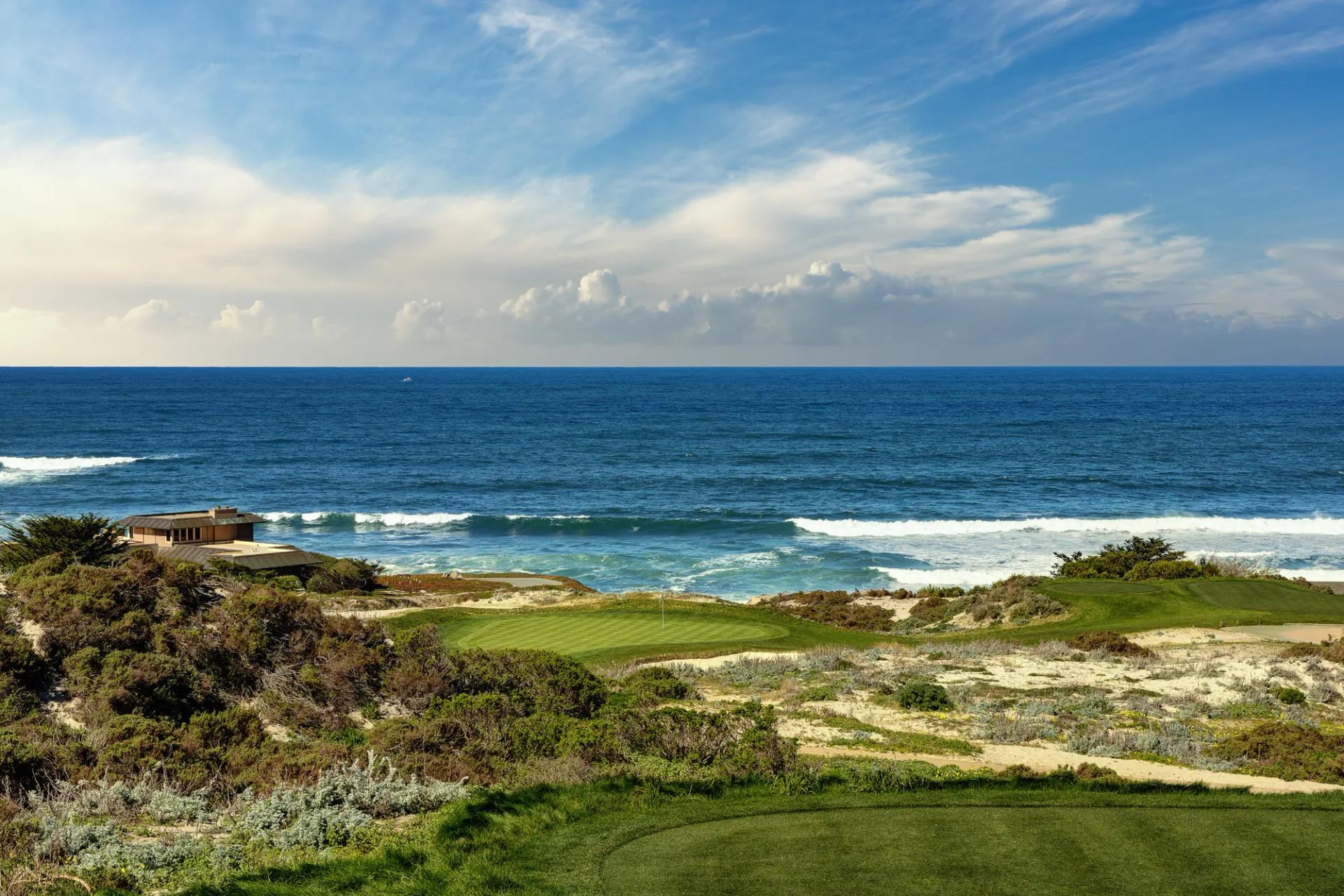
Robert Trent Jones Sr.'s 1966 course, running from Pebble Beach dunes into the Del Monte Forest.
Jack Neville and Douglas Grant · Pebble Beach
Pebble Beach Golf Links
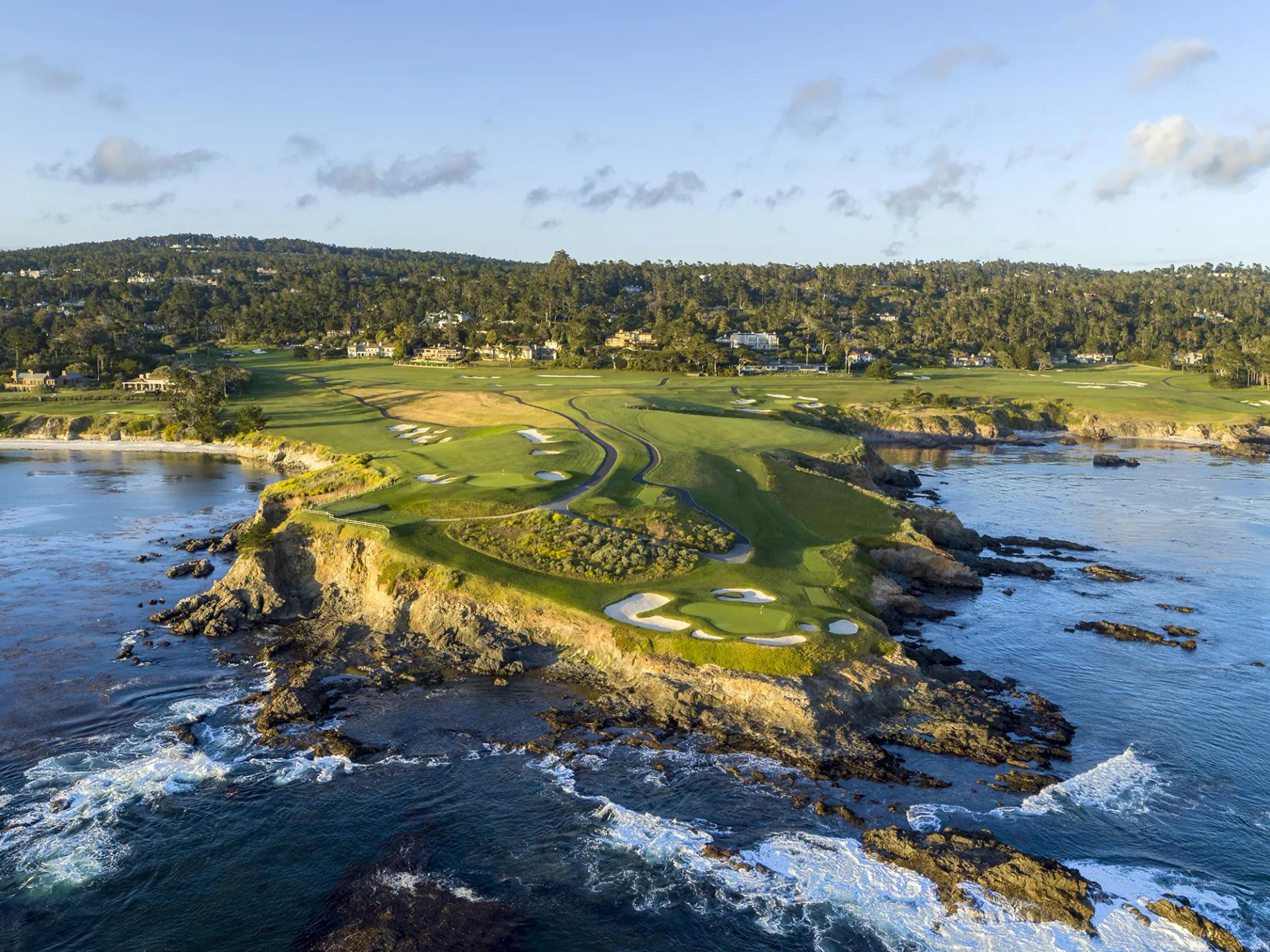
The 1919 Neville and Grant links on the Pebble Beach coast, a six-time U.S. Open venue.
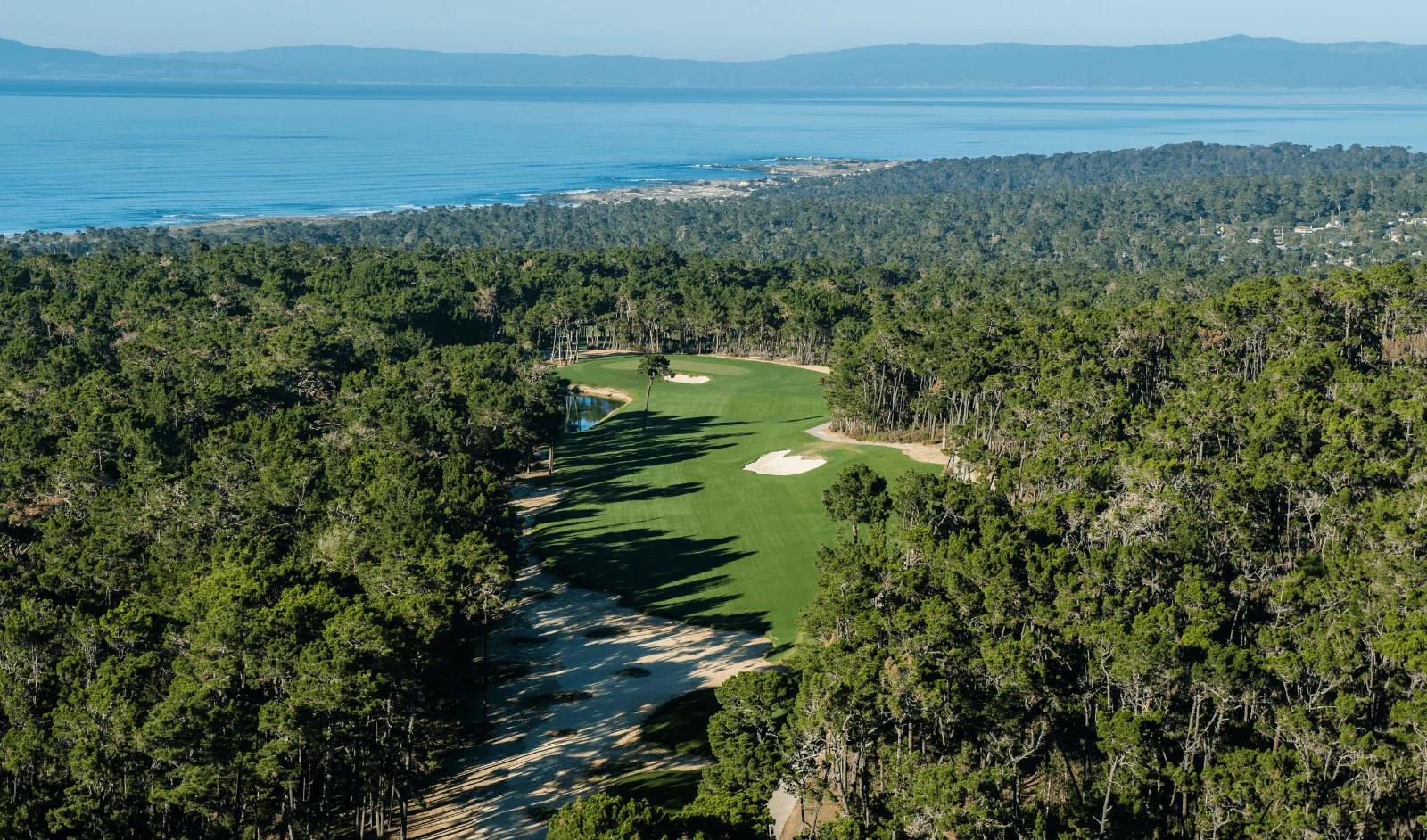
Robert Trent Jones Jr. · Pebble Beach
Poppy Hills Golf Course
The NCGA's course in the Del Monte Forest, rebuilt in 2014 by Robert Trent Jones Jr.
How to Play It
How to Play Cypress Point Club.
Cypress Point Club is a private club — play is reserved for members and their guests, with no public tee sheet. The only way on is a membership or a member's invitation.
Golf in CA is an independent guide — we don’t sell tee times or mark them up. We map the exact way on.